Can You Freeze Fudge?
Quick Answer
Yes, you can freeze fudge for about 2 to 3 months, and it keeps its rich, smooth texture when you wrap it very well so air and freezer odors stay out. When you thaw it slowly in the fridge while it is still wrapped, moisture stays on the wrapping instead of settling on the candy, so the surface stays dry and pleasant. You can then let it rest briefly at room temperature before serving, and it works beautifully for gifts, parties and small treats, though some batches may turn a little crumbly at the edges.
Why Fudge Handles the Freezer Well
Fudge is dense, sweet, and rich. That structure helps it freeze better than many soft desserts. Sugar holds the mixture together, and butter or cream gives it a smooth bite. When wrapped well, fudge keeps its flavor and shape for weeks without much trouble.
The main enemies are air and moisture. Air dries the surface and can cause pale spots. Loose wrapping lets the fudge pick up odors from other foods. Moisture is the other risk during thawing, when cold candy meets warmer air and collects droplets on the surface.
Different fudge styles react in their own ways. Classic chocolate fudge is usually sturdy. Peanut butter fudge also freezes well. Fudge with nuts keeps a nice texture, though nuts can soften slightly over time. Fudge topped with caramel or marshmallow may become stickier after thawing. A simple batch without delicate toppings is the most reliable.
How to Freeze Fudge
Let the fudge cool and set fully before you wrap it. Warm fudge can trap steam inside the wrap, and that extra moisture can make the surface sticky later. If the pan has just been cut, let the pieces sit until they feel firm and dry to the touch.
- Cut the fudge into serving pieces or leave a small slab whole.
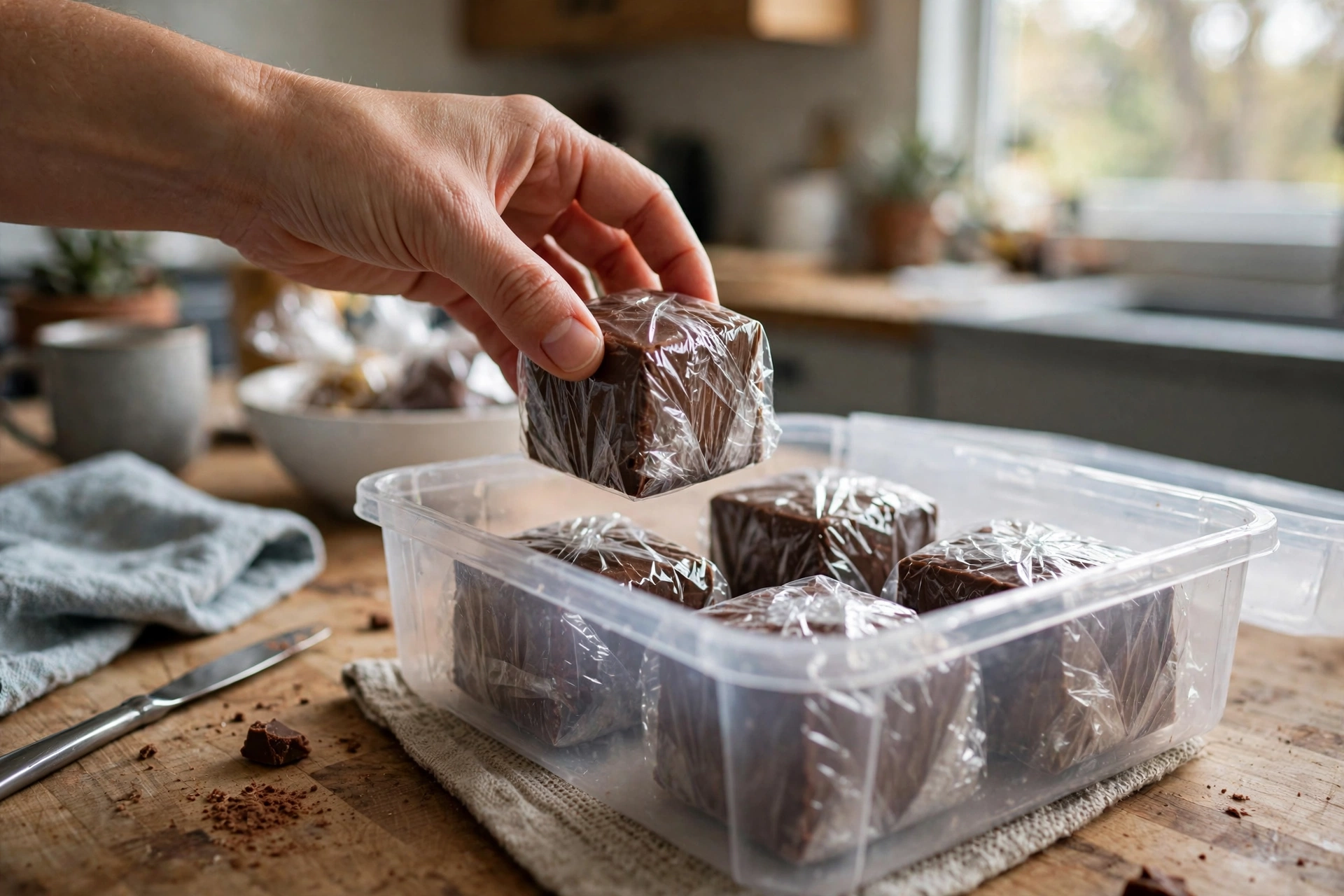
- Wrap each piece or slab tightly so the wrap touches the surface.
- Place wrapped pieces in an airtight container or freezer bag.
- Add a layer of parchment between stacks if pieces may stick.
- Press out extra air without crushing the candy.
- Label the container with the flavor and date.
- Freeze at 0°F, away from foods with strong smells.
Small pieces are handy for gifts and lunch treats. A whole slab can stay moister in the center, but it is less convenient when you only want one piece. Many people freeze half as a slab and half as cut squares. Small portions are the shared rule with freezing donuts, where little bags thaw without wasting the rest of the batch.
If the fudge has nuts, wrap with care so sharp pieces do not tear the wrap. A container offers better protection than a bag for fudge with toppings. Keep the container fairly full, since extra air space can allow drying.
How Long Fudge Keeps Good Quality
For best quality, eat frozen fudge within 2 to 3 months. It can remain safe longer while frozen, but flavor and texture slowly decline. Chocolate fudge often stays pleasant near the longer end of that range. Fudge made with fresh cream or delicate toppings is better used closer to 2 months.
- Chocolate fudge: About 3 months for the best smooth texture.
- Peanut butter fudge: About 2 to 3 months, with strong flavor.
- Fudge with nuts: About 2 to 3 months, though nuts may soften.
- Fudge with caramel topping: About 2 months, since topping can turn sticky.
- Maple fudge: About 2 to 3 months when wrapped very tightly.
Freezing does not improve fudge that tasted grainy from the start. If the batch already has a rough texture, the freezer will keep it about the same. Good fudge going in gives good fudge coming out.
Storage temperature matters. Place the container toward the back of the freezer, where the cold stays steady and texture is less likely to turn grainy.
Thawing Without a Wet Surface
Thaw fudge in the fridge while it is still wrapped, because this is the most important step for a dry surface. Cold fudge exposed to warm room air can collect moisture and turn sticky or wet, while the wrap catches much of that moisture instead.
A small piece may thaw in a few hours. A thick slab can take overnight. After the fudge feels soft through the center, you can move it to the counter for a short time before serving. Unwrap it after the chill has eased, not while droplets are still forming.
If the surface looks damp, let the unwrapped piece sit on a clean plate for a little while so the moisture can fade. Do not use heat to speed thawing. A microwave can melt edges and leave the center cold, which ruins the smooth bite.
Serve fudge at cool room temperature for the best flavor. Straight from the fridge, it can taste firm and muted. A short rest makes chocolate and butter flavors bloom again. Keep leftovers wrapped and return them to the fridge.
Texture Changes to Expect
Well wrapped fudge should stay creamy. The most common change is a slightly dry edge, especially on small pieces stored for a long time. You may also see a faint pale film if air reached the surface. That film is about quality, not a sign that the candy is unsafe by itself, but strong off smells or mold mean it should be discarded.
Some fudge turns a bit crumbly after freezing. This happens more with recipes that were cooked a touch too long. Crumbly fudge still tastes good in other uses. Crumble it over ice cream, stir pieces into warm milk for a sweet drink, or press crumbs into a dessert topping.
Fudge with marshmallow can become softer after thawing. Fudge with crisp toppings can lose crunch. If the topping matters, freeze the base and add fresh topping later when possible. Plain fudge gives the most predictable result.
Freezing Mistakes to Avoid
- Wrapping while warm: Steam gets trapped and makes the surface sticky.
- Loose wrap: Air dries the candy and carries freezer odors.
- Unwrapping too soon: Cold fudge gathers moisture and turns wet.
- Storing near strong foods: Sweet fudge can pick up onion or garlic smells.
- Leaving it too long: Flavor fades and edges grow dry.
- Thawing with heat: Edges melt and the texture becomes uneven.
A label sounds minor, but fudge flavors can look alike once wrapped. Mark chocolate, peanut butter, and maple batches clearly.
Serving and Saving Leftovers
After thawing, keep fudge wrapped and store it in the fridge if your home is warm. In a cool pantry, a well wrapped batch may keep for short periods, but the fridge gives steadier quality. Let pieces sit out briefly before eating so the texture softens.
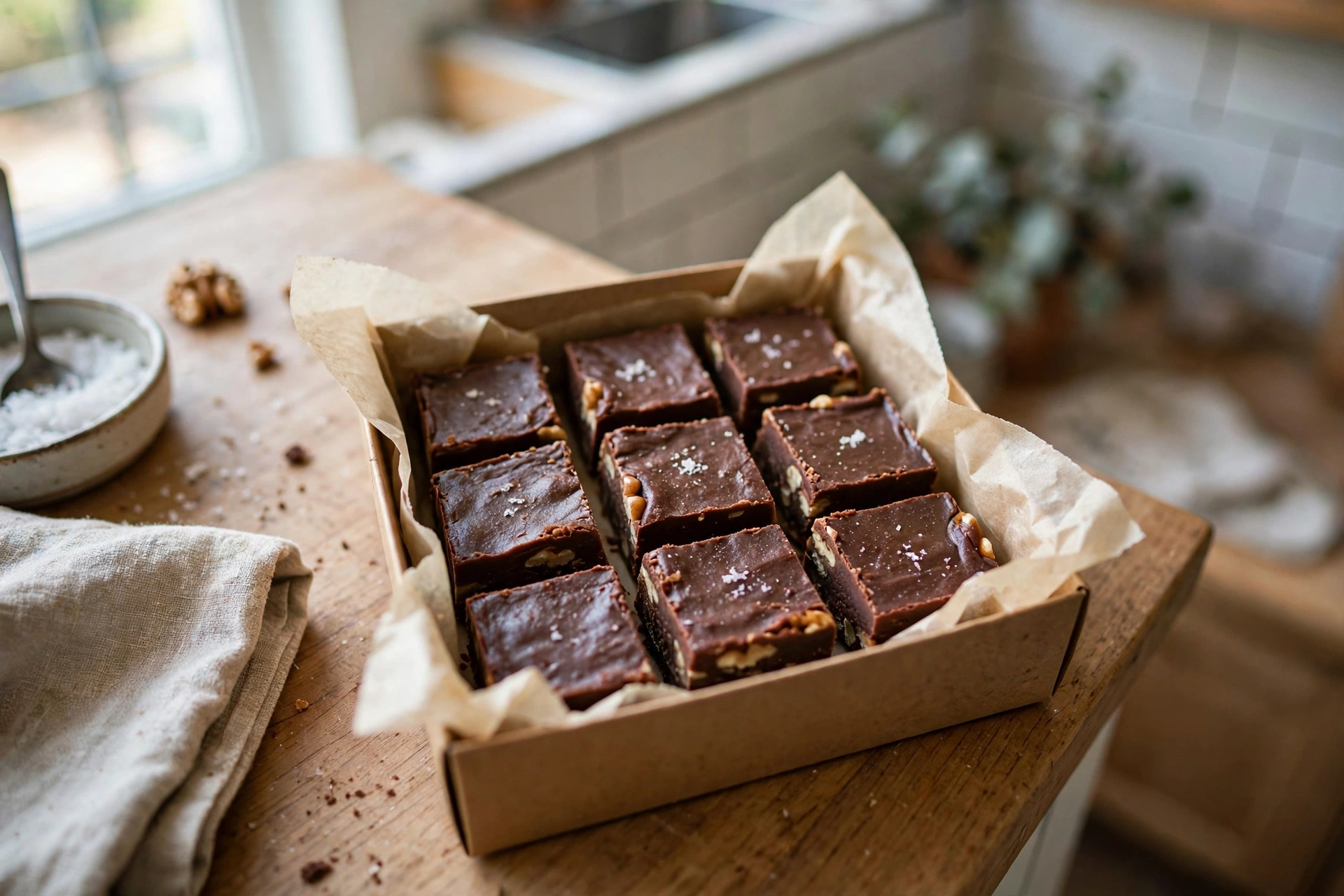
For parties, thaw only the amount you need. Fudge is rich, so small pieces satisfy most guests. If you are saving fudge for gifts, freezing cut squares works well. Thaw them wrapped, then place them in gift boxes with parchment. The pieces will look neat and taste fresh if used within the best quality window.
If you enjoy freezing make ahead desserts, our guide to can you freeze cheesecake is another helpful read for timing and thawing. The methods differ, but both reward careful wrapping and slow thawing.
Frequently Asked Questions
Can you freeze fudge with nuts?
Yes, fudge with nuts freezes well for about 2 to 3 months. Wrap it tightly so nut edges do not tear the covering. The nuts may soften a little, but the flavor stays good. Walnuts, pecans, and peanuts all hold up reasonably well.
Why did my fudge get wet after thawing?
This usually happens when cold fudge is unwrapped in warm air. Moisture from the air collects on the cold surface. Thaw it in the fridge while still wrapped, then unwrap after the deep chill fades. That keeps most moisture on the wrap.
Can you freeze homemade fudge and store bought fudge the same way?
Yes, the method is the same. Wrap pieces tightly, place them in an airtight container, and use them within 2 to 3 months. Store bought fudge may already have strong packaging, but an added outer container helps block air and odors.
How long does thawed fudge keep?
Thawed fudge keeps best for about 1 to 2 weeks in the fridge when wrapped well. The exact time depends on the recipe and room conditions. If it smells stale, looks moldy, or tastes off, throw it out.
Can you refreeze fudge?
You can, but quality drops. Pieces may become drier and more crumbly after another freeze. It is better to freeze fudge in portions so you thaw only what you need. If you must refreeze it, wrap it again tightly and use it sooner.
Conclusion
Fudge is one of the easiest sweets to freeze. Wrap it tightly, protect it from air and odors, and give it a slow fridge thaw while still wrapped. Used within 2 to 3 months, it should stay rich, smooth, and ready for gifts, parties, or a small treat after dinner. Careful thawing is the simple secret that keeps the surface dry and the bite just right.