Can You Freeze Pesto?
Quick Answer
Yes, you can freeze pesto, and it keeps its bright, herby flavor for about 3 to 6 months when you seal it away from air in small portions. You can freeze it in ice cube trays for single servings, in small jars with a little headspace, or spread flat in bags, and a thin layer of olive oil over the surface helps the green color stay fresh instead of darkening. When you need it, you leave a cube at room temperature for a short rest or drop it straight onto hot pasta, where it melts in minutes. Pesto frozen without the cheese keeps the longest and tastes freshest, so stir the cheese in after thawing and the sauce wakes up tasting newly made.
Why Does Pesto Darken, and How Can You Slow It?
Basil is a tender herb, and its bright green color fades when it meets air. In the freezer that same slow meeting keeps happening at the exposed surface, which is why the top of a frozen jar often turns a shade darker while the pesto underneath stays vivid.
Air is the enemy, and oil is the shield. A thin layer of olive oil poured over the surface seals the basil away from the cold, dry air, so the whole jar thaws the same green it went in. Pressing wrap directly onto the surface does the same job for containers without oil.
Small portions protect color too. A cube has little surface compared with its size, and it freezes fast, so tray frozen pesto often looks greener than a big jar thawed slowly.
How Do You Freeze Pesto in Ice Cube Trays?
The tray method gives you pesto in tablespoons, ready to melt the moment dinner exists. It is also the fastest way to save a large batch, because the cubes freeze solid in a few hours.
- Make or open the pesto and give it a good stir so the oil is even.
- Spoon the pesto into clean ice cube trays, filling each well nearly full.
- Smooth the tops with the back of a spoon so the cubes freeze level.
- Freeze the trays for about 3 to 4 hours, until the cubes feel hard.
- Pop the cubes out and move them quickly into a freezer bag.
- Press out the air, seal the bag and label it with the date.
- Freeze at 0°F and use within about 3 to 6 months.
If the pesto is headed for long storage, hold back the cheese when you make it. Cubes of cheeseless pesto keep their fresh flavor longest, and a spoonful of grated cheese stirred in at thawing takes seconds.
Can You Freeze Pesto in Jars and Flat Bags?
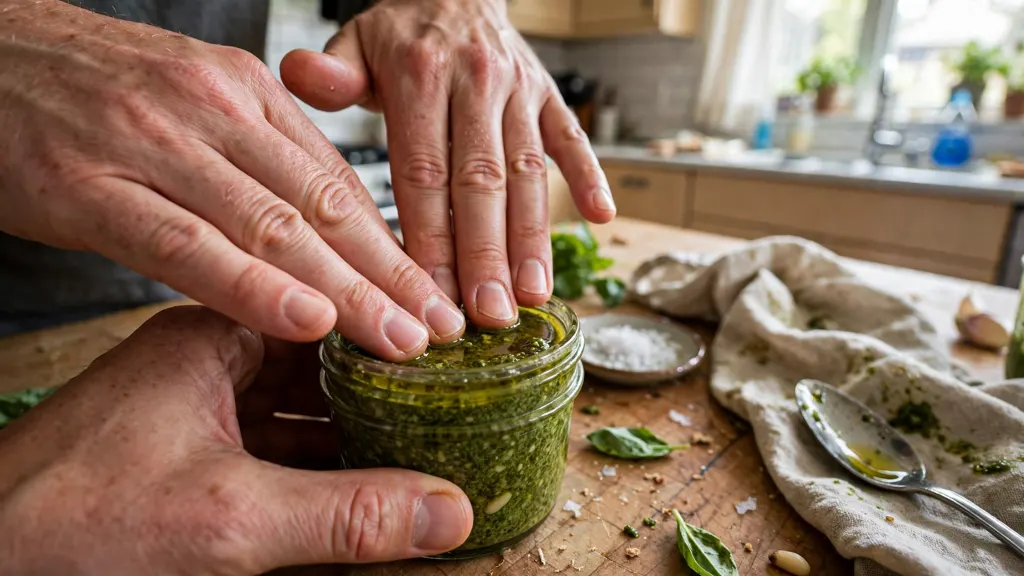
Jars suit cooks who thaw larger amounts for family pasta nights. Fill small jars only to an inch below the rim, because pesto expands as it freezes and a full jar can crack or push its lid. Pour a thin layer of olive oil over the top before sealing and the color stays bright for months.
Flat bags are the space savers. Spoon pesto into a sturdy freezer bag, press it into a thin, even layer, and freeze it flat. Later you can snap off a corner of the frozen sheet for a sandwich or a soup without thawing the whole bag.
Whichever container you choose, the rule is the same. Less air inside means greener, fresher tasting pesto when its turn comes.
How Long Does Pesto Keep in the Freezer?
Pesto stays at its best for about 3 to 6 months. It remains safe longer while frozen solid, but basil flavor slowly softens and the color dulls the more months pass.
- Ice cube portions in a sealed bag: About 3 to 6 months, thawing in minutes.
- Small jars with an oil layer: About 3 to 6 months, staying bright green.
- Pesto made without cheese: About 6 months at the freshest end of the range.
- Pesto with cheese mixed in: About 3 to 4 months before the cheese dulls the flavor.
- Thawed pesto in the fridge: About 5 to 7 days, sealed with a film of oil on top.
The date on the bag keeps the story straight. Basil season is short, so the oldest cubes deserve the first pasta night.
How Do You Thaw Pesto Without Losing the Green?
Pesto thaws faster than almost any sauce. A cube left on the counter softens in about 20 to 30 minutes, and the same cube dropped onto hot pasta melts almost at once, coating the strands as you toss.
Thaw a jar overnight in the fridge, still sealed, and give it a thorough stir before serving because the oil settles as it warms. If the sauce looks tired, a small squeeze of lemon juice wakes the basil flavor and brightens the color at the same time.
Avoid the microwave for thawing when you can. Hot spots can cook the basil and turn the sauce dark, while a patient counter rest keeps it tasting raw and fresh, which is the whole charm of pesto.
What Are the Best Uses for Frozen Pesto Cubes?
Pasta is only the beginning. A thawed cube stirred into warm soup at the last minute gives the whole pot a fresh, summery lift, and two cubes melted into scrambled eggs turn a plain breakfast green and fragrant.
Cubes also spread kindly once softened. Stir one through softened butter for garlic bread, whisk it into a vinaigrette, or spread it over pizza dough and sandwiches where a whole jar would never be thawed for such a small job. That is the real gift of small portions, because no amount is too little to bother with.
Frequently Asked Questions
Can you freeze store bought pesto from a jar?
Yes, and it freezes much like homemade for about 3 to 6 months. Move it out of a full jar into a container with headspace, or freeze it in ice cube trays for easy portions. A thin layer of oil on top keeps the surface green.
Should you freeze pesto with or without cheese?
Without cheese, when you can, because cheeseless pesto keeps the longest and tastes freshest after thawing. The cheese can turn a little grainy over long storage. Stir grated cheese into the thawed sauce just before serving and nobody will know it was ever missing.
Can you freeze pesto in the ice cube tray without popping it out?
You can leave the cubes in the tray for a short stay, but bags are better for months of storage. An open tray invites freezer smells and frost, while a sealed bag protects the flavor. Pop the cubes out once solid and bag them the same day.
Why did my pesto turn brown after thawing?
Browning means air reached the basil, usually at an exposed surface with no oil layer or wrap touching it. The sauce is still safe to eat, and stirring may reveal brighter green underneath. Next time, cover the surface with oil or wrap pressed directly onto the pesto.
Can you refreeze thawed pesto?
It is better not to, because the basil flavor fades with every freeze and the texture grows dull. Freeze in small portions so you only thaw what a meal needs. Leftover thawed pesto keeps about 5 to 7 days in the fridge under a film of oil.
Conclusion
Pesto freezes kindly for about 3 to 6 months when small portions, a tight seal and a thin layer of oil keep the air away from the basil. Trays give you instant pasta portions, jars hold family sized amounts, and freezing without cheese keeps the flavor freshest. A summer glut of basil becomes green, ready sauce all winter long.