Can You Freeze Salsa?
Quick Answer
Yes, you can freeze salsa for about 1 to 2 months, and cooked salsa usually freezes better than fresh salsa because the vegetables already soften and blend more naturally as they thaw. When you pack it in a clean freezer container with a little headspace and thaw it slowly in the fridge, the flavor stays bright even though the chunks turn softer. Give it a good stir and drain a little extra liquid if needed, then use it in cooked dishes, eggs, soups and sauces where the softer texture fits in beautifully.
Which Salsa Freezes Best
Cooked salsa is the easiest kind to freeze. The tomatoes, onions, and peppers have already softened, so the thawed texture feels more natural. It may still release liquid, but a good stir brings much of it back together.
Fresh salsa can also freeze well for a short time. The taste usually stays lively, yet tomato pieces can become watery and onion can taste stronger after thawing. If you plan to serve it with chips, it may not have the same crisp bite as the day it was made. For a dip that needs body, choose cooked salsa or plan to use the thawed batch in warm food.
Chunky jarred salsa from the store often freezes much like cooked salsa. Smooth salsa also freezes well and is simple to thaw for sauces. Very watery salsa may separate more, but stirring and a short simmer can help.
How to Freeze Salsa
Start with salsa that smells fresh and tastes good. Freezing will not fix salsa that has already sat too long in the fridge. If the batch has been open for several days, cook it into a meal instead of freezing it for later.
- Chill the salsa fully in the fridge if it is warm from cooking.
- Choose a freezer safe container or a sturdy freezer bag.
- Leave a little space at the top because salsa expands as it freezes.
- Remove as much air as you can from bags before sealing.
- Label the container with the name and date.
- Freeze small portions if you often use only a spoonful or two at a time.
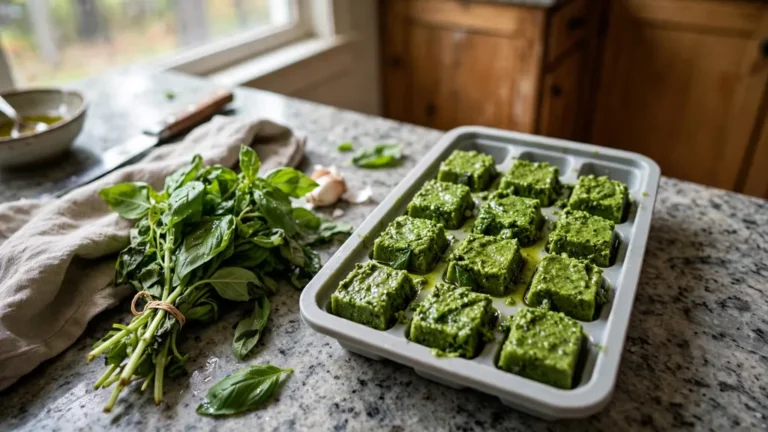
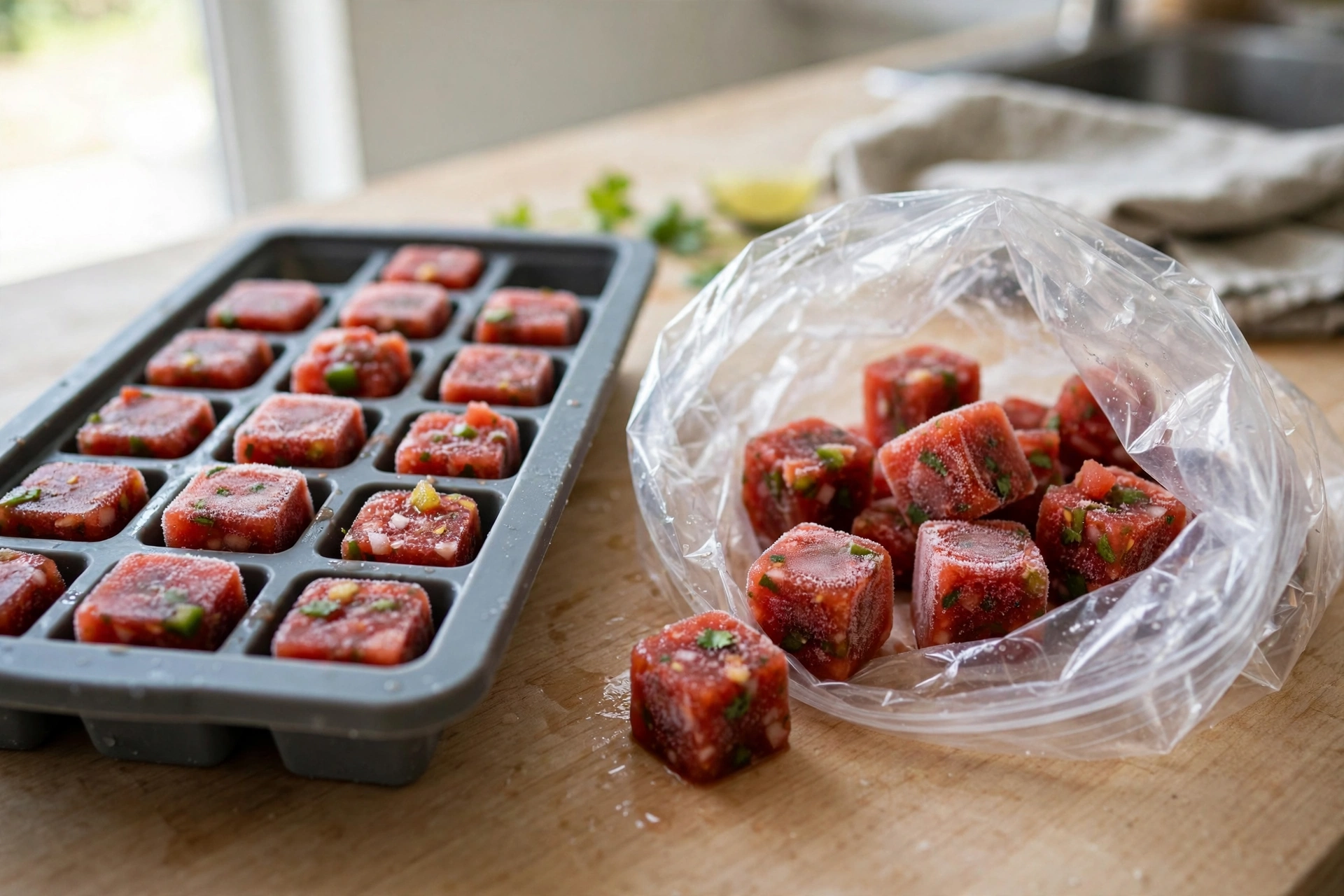
Ice cube trays work well for tiny spoonfuls. Larger containers suit soups, chili, and slow cooked meals.
Portion size matters. Freeze the amount you can finish within a few days after thawing. This reduces waste and keeps flavor fresher.
If you use a bag, lay it flat until frozen. Flat bags stack neatly and thaw faster than a thick block. Place the bag on a tray at first in case the seal leaks. After it is firm, you can store it upright or flat with other meal portions.
How Long Salsa Keeps Its Quality
For best quality, use frozen salsa within 1 to 2 months. It can remain safe longer when kept frozen at 0°F, but the bright flavor and texture slowly fade. Fresh styles lose quality faster than cooked styles because raw tomato and onion change more in the cold.
- Fresh pico style salsa: About 1 month for the best texture.
- Cooked tomato salsa: About 2 months for the best flavor.
- Smooth salsa: About 2 months, with easy stirring after thaw.
- Salsa verde: About 2 months, though the color may deepen a bit.
- Fruit salsa: Closer to 1 month, since soft fruit turns mushy fast.
These times are quality guides, not hard safety lines. The main risks come from poor storage before freezing, dirty containers, and slow thawing at room temperature. Freeze salsa soon after making or opening it, and keep the freezer cold and steady.
If you grow your own tomatoes, this is a useful way to save extra summer flavor. Our guide to can you freeze tomatoes can help when you have whole tomatoes to store instead of finished salsa.
How to Thaw Salsa the Right Way
Move the container from the freezer to the fridge and let it thaw slowly, because a small portion may thaw in a few hours while a large container can take overnight. Keep it sealed while it thaws so it does not pick up fridge odors along the way.
Once thawed, open and stir well. Liquid often pools on top, especially with fresh tomato salsa. You can stir the liquid back in for sauces or pour off a little for a thicker dip. If it still feels thin, simmer it in a pan for a few minutes. The heat drives off water and brings the flavor back together.
Cold water thawing can work for a sealed bag when you need it sooner. Place the bag in cold water and change the water every 30 minutes. Use the salsa right after it thaws. Do not leave salsa sitting on the counter for hours, because room temperature thawing can let bacteria grow.
Why Thawed Salsa Turns Watery
Tomatoes hold a lot of water. Ice crystals break their cell walls in the freezer, so liquid escapes when the salsa warms. Onions and peppers also soften for the same reason. This change is normal and does not mean the salsa spoiled.
A short drain in a fine strainer can help when you want a thicker result. Stir in a spoon of tomato paste for cooked dishes. Add fresh chopped cilantro, a squeeze of lime, or finely diced onion after thawing to wake up the flavor. These small touches help, but they cannot fully restore the crunch of fresh vegetables.
Heat changes the deal in your favor. When salsa goes into soup, beans, rice, or eggs, extra liquid blends into the dish. A watery texture matters most for chip dipping. For that reason, many home cooks freeze cooked salsa for meals and make fresh salsa when chips are the main event.
Mistakes That Hurt Quality
- Freezing old salsa: The flavor will not improve in the freezer, and sour notes can get worse.
- Using a thin bag: Sharp ice and rough handling can tear weak plastic and cause leaks.
- Skipping headspace: Salsa expands, and a packed container can crack or pop open.
- Thawing on the counter: This is not safe for a tomato and onion mix.
- Refreezing many times: Each cycle makes the texture softer and the taste flatter.
Glass jars need care too. Leave enough room for expansion and do not use a jar with narrow shoulders if the salsa will rise as it freezes. A wide container is easier to fill, thaw, and stir.
Best Ways to Use Thawed Salsa
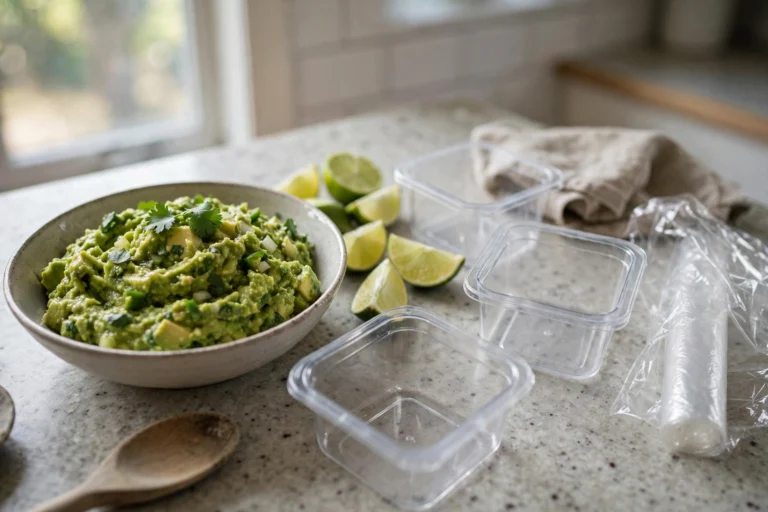
Thawed salsa shines in cooked food. Stir it into scrambled eggs, breakfast potatoes, beans, rice, chili, taco meat, soup, or a pot of lentils. Taco night is the obvious home for it, and freezing guacamole means the second dip can thaw beside it. It can also become the base of a quick enchilada sauce when blended and warmed with a little broth and spice.
For snacks, drain it well and serve it soon after thawing. A thicker cooked salsa holds up better on chips than a fresh chunky style. You can also spoon a little over grilled chicken, fish, or roasted vegetables. The key is to match the softer texture with foods that welcome sauce. A freezer snack board pairs it naturally with freezing hummus, which also thaws best in small tubs.
Frequently Asked Questions
Can you freeze salsa in the jar it came in?
You can if the jar is freezer safe and there is room for expansion, but it is safer to move it to a container made for freezing. Glass can crack when liquid expands. A plastic freezer tub or bag gives the salsa room and reduces the risk of a mess.
Does frozen salsa taste the same after thawing?
The flavor is close, but the texture changes. Cooked salsa tastes most similar because it is already soft. Fresh salsa often becomes watery and less crisp. A good stir, a little draining, and fresh lime or cilantro can make it taste lively again.
Can you freeze fresh pico de gallo?
Yes, but expect a soft result. Pico de gallo relies on crisp tomato, onion, and pepper pieces. Freezing breaks that crunch, so thawed pico works better in eggs, beans, rice, and cooked dishes than as a fresh topping.
How long does thawed salsa last in the fridge?
Use thawed salsa within 3 to 4 days for best quality. Keep it cold, use a clean spoon, and check for sour smells or mold before serving. If it smells off or looks slimy, throw it out.
Can you refreeze thawed salsa?
It is best not to refreeze salsa after it has thawed in the fridge unless you cook it first. Refreezing makes the texture more watery and flat. Cooking it into a sauce or soup is a better way to save a large thawed batch.
Conclusion
Salsa freezes well when you treat it as a sauce rather than a crisp dip. Cooked styles give the most reliable texture, and small portions thaw with less waste. Freeze it fresh, label it clearly, thaw it in the fridge, and stir or drain it before serving. Used in warm meals, thawed salsa keeps its bold flavor and saves good food from being tossed.