Can You Freeze Cooked Pasta?
Quick Answer
Yes, you can freeze cooked pasta for about 1 to 2 months, and it keeps its bite best when you cook it just shy of done, cool it quickly and toss it with a little oil before packing. When you freeze it in meal sized portions and reheat it gently in hot sauce or in a brief dip of boiling water, the pasta finishes tender instead of turning soft and gummy. Because the sauce protects it as it reheats, pasta reheated in sauce is often the easiest and tastiest way to serve it again.
Why Pasta Texture Changes
Pasta keeps soaking up water even after it leaves the pot. In the freezer, that extra moisture can make strands swell and turn mushy when reheated. Stopping the cook a little early protects the bite because the pasta will cook again during reheating.
Short shapes such as penne, rotini and shells usually freeze more evenly than long strands. Long noodles can clump into a nest and break when you try to separate them. They still work, but portioning and a light oil toss matter even more.
How to Freeze Cooked Pasta
- Cook just shy of done: Boil the pasta until it is tender with a firm center, then drain right away.
- Cool it fast: Spread pasta on a tray or rinse briefly with cool water if the recipe allows, so it stops cooking.
- Toss with oil: Coat the pasta lightly with olive oil to reduce sticking while it freezes.
- Portion small amounts: Pack one meal at a time in freezer bags or containers so thawing is quick.
- Choose sauce wisely: Freeze pasta plain for flexibility, or freeze it in sauce when you want a ready meal.
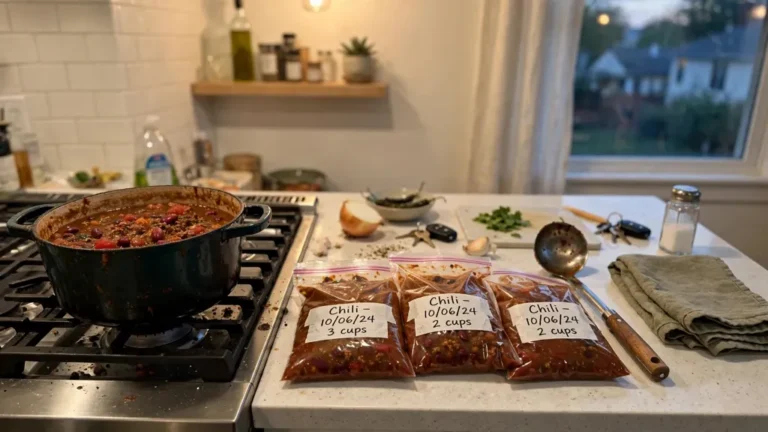
- Label clearly: Write the shape, date and whether sauce is included, because frozen pasta shapes look alike in bags.
How Long Cooked Pasta Keeps
Use frozen cooked pasta within about 1 to 2 months for the best bite. It remains safe while frozen, but the texture becomes softer and the surface can dry during long storage. Baked pasta dishes often hold up better than plain noodles because the sauce and cheese protect the pasta from air.
Keep portions flat in bags so they stack and thaw evenly. If you freeze pasta in sauce, leave a little room in the container because sauce expands as it freezes. A shallow container warms more evenly than a tall block.
Best Way to Reheat Frozen Pasta
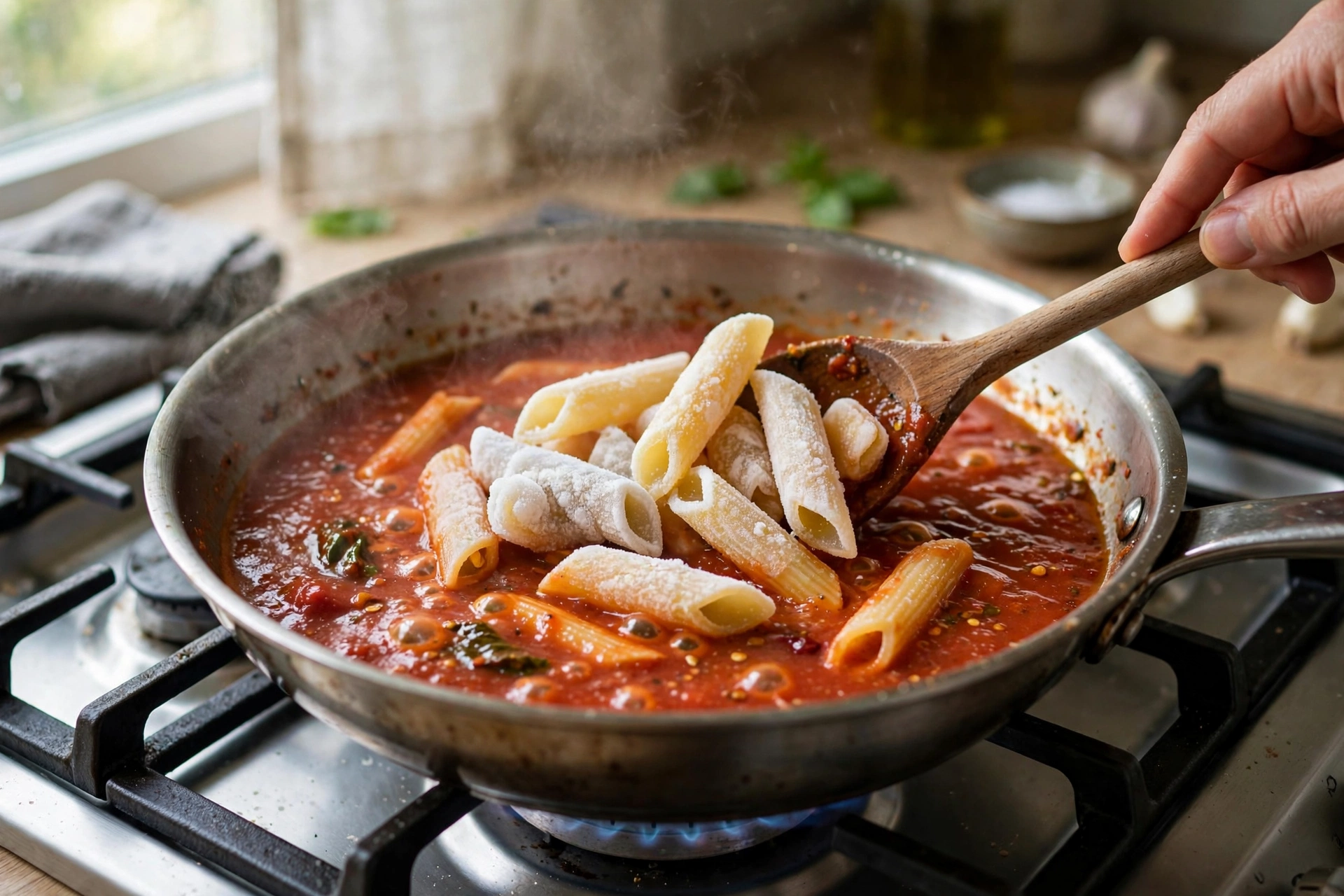
The tastiest method is to drop the frozen pasta into simmering sauce, because the sauce adds moisture while the pasta finishes cooking as it warms through. Stir gently and add a splash of water if the sauce looks thick, then taste a piece so you can catch the bite you want before it softens too far.
For plain pasta, a short dip in boiling water works well. It needs only a brief warm through, not a second full boil. Microwaving can work for a single portion, but sprinkle a little water over the top and stir once so the edges do not dry.
Pasta Dishes That Freeze Well
Baked ziti, lasagna style pasta and pasta in hearty tomato sauce are strong freezer choices. The sauce cushions the noodles and makes reheating simple. Cream sauces can freeze, but they may separate a little and need gentle stirring as they warm. The classic proof is freezing mac and cheese, where cheese sauce protects every piece.
Plain pasta is best when you want choices later. One bag can become a tomato dinner, a garlic butter side or a soup addition. If chicken is part of the meal plan, our guide to can you freeze cooked chicken pairs well with pasta portions for fast weeknight bowls.
Freezing Pasta for Meal Prep
Cooked pasta works best in meal prep when each portion has a clear plan. Freeze plain portions for flexible dinners, or pair the pasta with sauce in single serving containers for grab and heat lunches. A shallow layer cools and freezes faster than a deep mound, and it also reheats more evenly.
Label the portion size in simple terms, such as one lunch or two servings. Frozen pasta is hard to divide once solid, and breaking an icy block can shatter the pieces. If you often cook for different appetites, freeze a few small bags instead of one family bag.
Think about the sauce before freezing. Tomato sauce, hearty meat sauce and many cheese based baked dishes protect the pasta during storage. Grains ask for the same portion habit, and freezing cooked rice in flat bags keeps weeknight bowls just as easy. Light butter sauces are less protective and can feel oily after reheating, so freeze those sauces separately when possible.
For lunch containers, let the pasta cool before sealing the lid. A sealed hot container traps steam and softens the surface while it waits to freeze. Ten quiet minutes on the counter can protect the bite you worked to save.
What Not to Freeze
Avoid freezing pasta that is already very soft. It will come back even softer and can fall apart in sauce. Pasta sitting in thin soup for a long freezer stay also turns bloated, so freeze the broth and add fresh or separately frozen pasta when serving.
Seafood pasta needs extra care because shrimp and fish change texture on their own schedule. If the dish matters, freeze the sauce and cook pasta fresh for serving. That small extra step often tastes better than rescuing tired noodles.
Mistakes That Make Pasta Gummy
Overcooking before freezing is the main mistake. The second mistake is packing hot pasta into a sealed bag, where steam keeps cooking the surface. Cool it, oil it lightly and give the bag a flat shape before it goes into the cold.
Skipping oil can also cause a solid clump. You do not need much, just enough to coat the pieces. Too much oil makes the final dish greasy, so drain well and use a light hand.
Frequently Asked Questions
Can I freeze pasta with sauce on it?
Yes. Pasta in sauce often reheats better than plain pasta because the sauce protects it and adds moisture. Tomato based sauces are especially freezer friendly.
Should I freeze pasta dry or cooked?
Cooked pasta is ready for fast meals, but dry pasta stores longer at room temperature. Freeze cooked pasta only when you have leftovers or want ready portions.
How do I stop frozen pasta from sticking?
Cook it just shy of done, cool it quickly and toss with a little oil before packing. Small flat portions also separate more easily.
Can I freeze spaghetti?
Yes, but it clumps more than short shapes. Twist spaghetti into small nests, oil lightly and freeze portions so you can reheat one nest at a time.
Can I reheat frozen pasta from frozen?
Yes. Add it to simmering sauce or give it a brief dip in boiling water. It only needs to warm through and finish cooking, not boil for long.
Conclusion
Cooked pasta can be a handy freezer staple when you protect its texture from the start. Stop the boil early, oil the pieces lightly and freeze small portions for about 1 to 2 months. Reheat in sauce whenever you can, and yesterday pasta becomes an easy dinner base instead of a gummy leftover.