Can You Freeze Quiche?
Quick Answer
Yes, you can freeze quiche, and a baked quiche wrapped tightly keeps well for about 2 to 3 months, while an unbaked quiche keeps for about 1 to 2 months and then bakes from frozen with some extra time. The trick is to cool a baked quiche fully before you wrap it, because a set custard and a dry crust survive the freezer far better than a warm and steamy one. When you want to serve it, reheat slices from frozen in the oven so the crust crisps again instead of going soft in the microwave. Frozen quiche is perfect for brunches, light dinners and make ahead lunches, and a whole one warmed gently tastes close to fresh baked.
Baked or Unbaked: Which One Should You Freeze?
Freezing a baked quiche is the simpler path, and it suits most cooks. The custard is already set, the crust is already crisp, and reheating is quick and predictable. A baked quiche also slices cleanly, so you can freeze single portions and pull out exactly what a lunch needs.
Freezing an unbaked quiche gives you that fresh from the oven moment later. The raw filling sits in the raw crust, and on baking day the whole thing goes into the oven still frozen with extra time added. The result tastes newly made, though the bottom crust can soften a little where the filling rested against it.
Choose baked when you want easy reheating and tidy slices. Choose unbaked when the quiche is meant for guests and you want it to bake in front of them. Both keep well inside their windows, so the choice is about the day you serve it, not about safety.
How to Freeze a Baked Quiche
A quiche that goes into the freezer warm will steam inside its wrap, and that steam is the enemy of a crisp crust. Give it time to cool and set, and the freezer part becomes easy.
- Bake the quiche and let it cool fully at room temperature so the custard sets.
- Chill it in the fridge for a while, because a firm quiche wraps and slices cleanly.
- Leave it whole for a future meal, or cut neat slices for single servings.
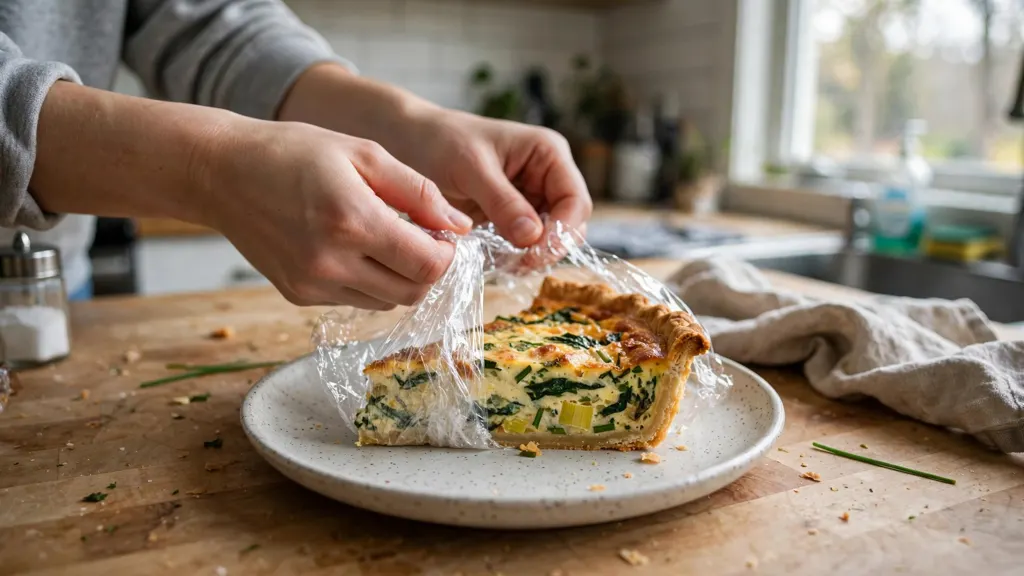
- Wrap the whole quiche, or each slice, tightly in plastic wrap.
- Add a layer of foil over the wrap for extra protection from freezer air.
- Slide it into a freezer bag or a rigid container so nothing squashes the top.
- Label it with the filling and the date, freeze at 0°F, and use within about 2 to 3 months.
If you freeze the quiche in its baking dish, wrap the whole dish tightly and know that the dish is out of service until thawing day. Sliding the cooled quiche onto a lined plate or board first frees the dish and still freezes beautifully.
How Long Does Quiche Keep in the Freezer?
Quiche stays safe frozen for a long time, but the custard and crust taste best inside these windows, so let the date on the label lead the rotation.
- Whole baked quiche, wrapped tight: About 2 to 3 months with a firm custard and crisp crust.
- Baked slices, wrapped one by one: About 2 to 3 months, ready to reheat singly.
- Unbaked quiche, filling resting in raw crust: About 1 to 2 months, then bake from frozen with extra time.
- Quiche frozen after a day in the fridge: About 2 to 3 months, though the crust softens a little sooner.
Fillings with a lot of water, like spinach that was not squeezed dry or fresh tomatoes, shorten the happy window a little, because they release liquid as they thaw. The quiche is still good, it just wants a gentle blot and a thorough reheating.
Past these times the quiche will not thrill anyone, though it is still safe while it stayed frozen solid. Trust the smell after reheating, and let anything sour go.
Reheating Frozen Quiche So the Crust Stays Crisp
Heat and patience bring a frozen quiche back. Slices reheat best from frozen in a moderate oven, set on a tray so the bottom gets dry heat too. The custard warms through gently while the crust crisps again, and the slice comes out tasting baked rather than reheated.
A whole quiche can reheat from frozen at a slightly lower heat for longer, or thaw overnight in the fridge and then warm until the center feels hot. The fridge thaw gives the most even result when the quiche is thick, because the middle needs time to catch up with the edges.
The microwave is the one tool to avoid here. It warms the custard fast but steams the crust soft, and a soggy crust is the main thing people dislike about reheated quiche. Save the microwave for a desperate slice, and even then finish it in a hot pan or oven for a minute to dry the base.
Why Does Quiche Weep After Thawing?
Egg custard holds water in a delicate net, and freezing squeezes that net. Tiny ice crystals form inside the filling, and when they melt, a little liquid escapes and pools on the slice. That small puddle is the weep, and it happens to nearly every frozen quiche.
The fix is gentle. Blot the slice softly with a paper towel before or after reheating, and let the oven heat dry the surface the rest of the way. A few minutes of reheating past hot, not long enough to toughen the eggs, usually clears it fully.
You can also prevent most of it next time. Cook watery vegetables before they go into the filling, squeeze spinach dry, and let the baked quiche cool completely before wrapping, so steam does not add extra water to the custard.
Frequently Asked Questions
Can you freeze quiche in the glass dish you baked it in?
Yes, if the dish is freezer safe, and you wrap the whole dish tightly so no air reaches the surface. Remember that the dish stays busy until the quiche thaws, and a frozen glass dish should warm up in the fridge rather than going straight into a hot oven. Many cooks slide the cooled quiche out and freeze it on a lined board instead.
Can you freeze quiche with spinach, mushrooms or tomatoes?
Yes, and these fillings freeze well when they were cooked first and drained. Spinach should be squeezed very dry, mushrooms sauteed until their liquid cooks off, and tomato slices patted dry, because raw watery vegetables weep a lot after thawing. With that small prep, vegetable quiche keeps its flavor beautifully.
Can you freeze mini quiches for a party?
Yes, and they are one of the smartest make ahead party foods. Bake them, cool them fully, freeze them in one layer on a tray, and then move them into a bag for about 2 to 3 months. Reheat the frozen minis on a tray in the oven until hot and crisp, and they taste freshly made.
How can you tell if frozen quiche has gone bad?
Heavy frost, a dry pale surface and an off smell after reheating are the clear signs. The custard may also look curdled and watery in a way blotting cannot fix. When in doubt, throw it out, because eggs tell you honestly when they are done.
Can you eat thawed quiche cold?
Yes, if it was thawed in the fridge and kept cold, a slice eats nicely cold or at room temperature, much like a frittata. Many people prefer it that way for lunch. Just do not leave it sitting out for hours, and warm leftovers thoroughly if you reheat them a second time.
Conclusion
Quiche freezes gracefully, baked for about 2 to 3 months or unbaked for about 1 to 2 months, as long as it cools fully and wears a tight wrap. Reheat it in the oven so the crust crisps, blot any little weep from the custard, and it serves like something you baked today. A frozen quiche turns any brunch into an easy one.