Can You Freeze Ricotta Cheese?
Quick Answer
Yes, you can freeze ricotta and it stays safe in the freezer. It turns a little grainy and suits baked dishes best. For best quality use it within about 1 month and up to 2 months at most.
What Changes Inside the Freezer
Ricotta is soft and wet, so cold air reaches it fast. Ice forms inside the curds and breaks the smooth set. Once it thaws, the texture will feel a bit grainy and loose.
It still melts and blends well once it meets heat. A raw spoonful on toast will taste rough, so save thawed tubs for cooking. Like cream cheese, it keeps its mild flavor in the freezer but loses its silk like feel.
Whole milk ricotta holds a bit more body than part skim ricotta after thawing. Both will release some clear liquid on top. That liquid is whey, and it is normal to see it.
Portioning It for an Easy Thaw
Stir the tub well before you pack it. This mixes the whey back in and gives each portion the same feel. Work with fresh ricotta that still smells sweet and clean.
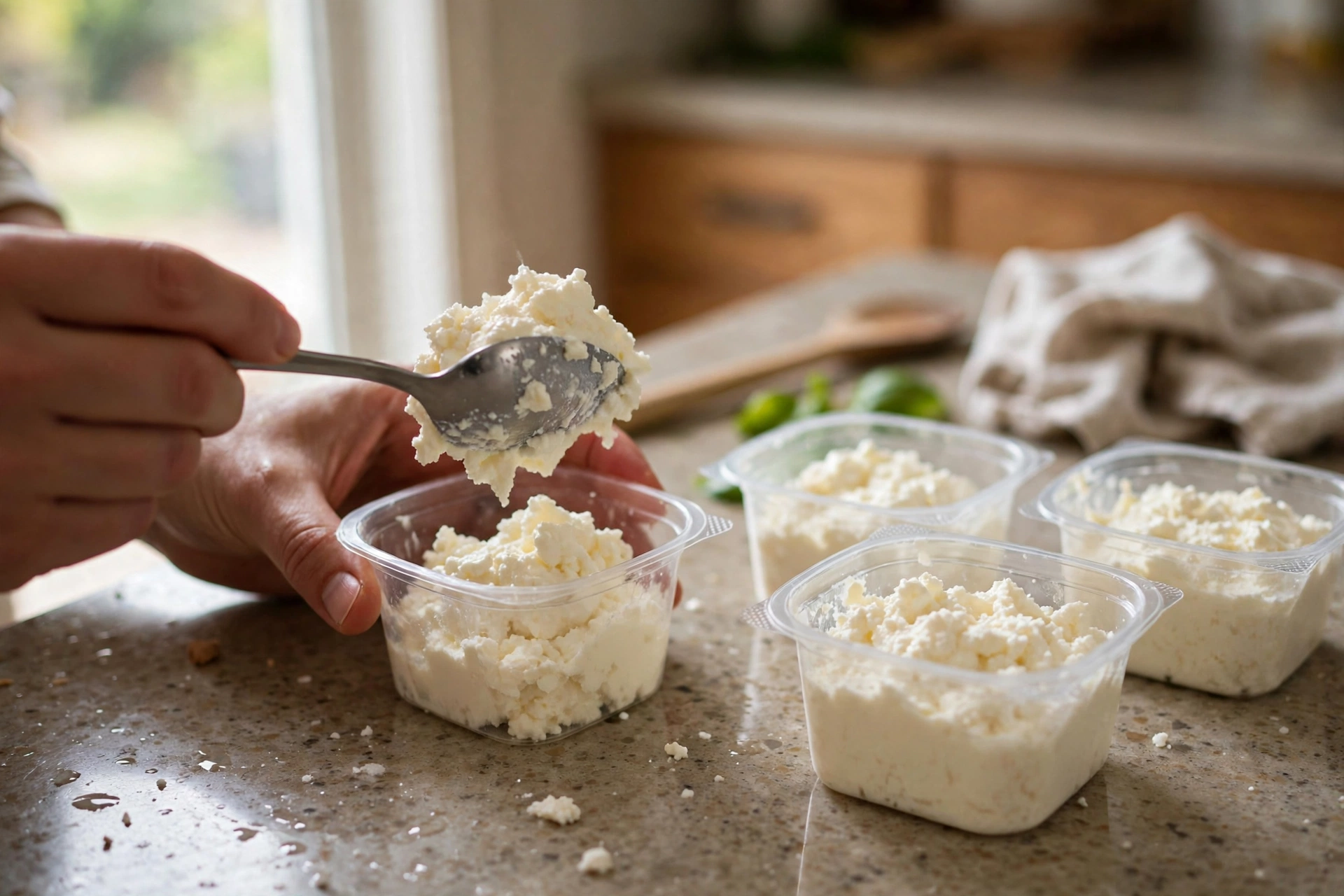
Use small clean tubs with tight lids. Aim for one cup portions for most pasta bakes. Leave a little room at the top for swell as it freezes.
- Stir: Stir the ricotta in its tub until smooth.
- Spoon: Spoon it into small tubs in one cup amounts.
- Leave room: Leave a small gap at the top of each tub.
- Seal: Press the lid on tight to keep air out.
- Add a date: Write the pack date on the lid with a marker.
Small portions thaw fast and waste less food. You pull out only what the dish needs that day. The rest stays frozen and keeps its quality.
Stretch of Time in the Freezer
Ricotta holds best quality for about 1 month in the freezer. You can keep it up to 2 months and still use it in baked dishes. Past that point the taste fades and freezer smell can creep in.
USDA style guidance treats soft cheese as a quality item with about 1 week in the fridge. The freezer pauses spoilage, but it does not improve texture. Pack small amounts so you finish each tub soon after thawing.
Keep your freezer cold and steady for the full storage time. Place tubs flat so they stack well and freeze fast. Keep them away from strong foods like onion or garlic, as dairy can pick up odors.
Thawing and Fixing the Grain
Move the tub to the fridge for about 24 hours. Let it thaw slow and cold. Do not thaw it on the counter.
Stir well once it turns soft. If a pool of liquid sits on top, you can stir it back in for moist bakes or drain it off for firm fillings. Stuffed shells need a firm mix, so drain most liquid for that dish.
The texture will stay a little grainy even after stirring. It will feel close to cottage cheese after a freeze. Heat smooths most of that grain, so baked food hides it well.
Use thawed ricotta within 2 days. Keep it cold in the fridge until the pan is ready. A fast stir just before you add it to the dish helps it spread with ease.
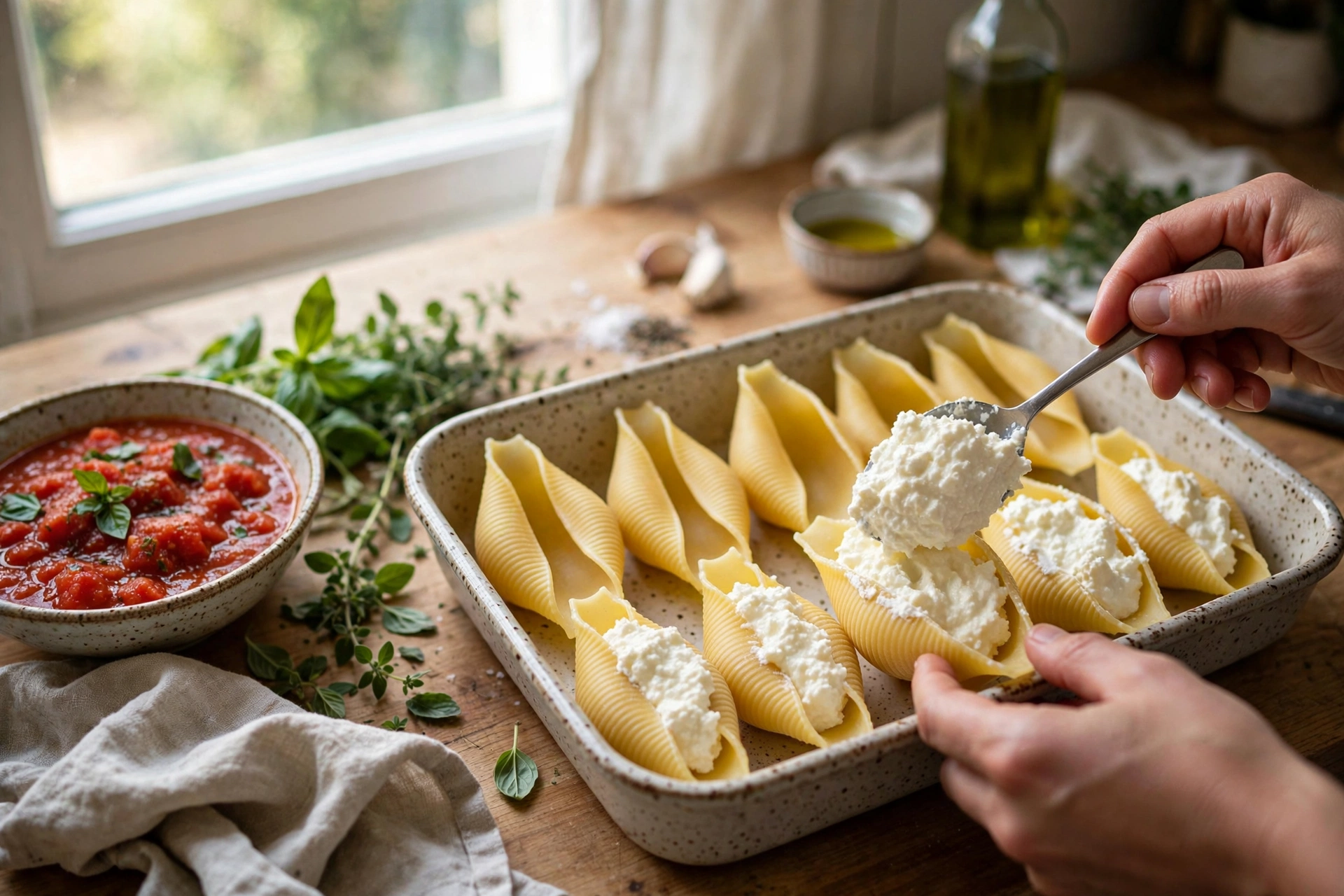
Meals That Love Thawed Ricotta
Lasagna is the top pick for thawed ricotta. It melts into sauce and cheese, so grain fades away. Stuffed shells and baked ziti also welcome it with ease.
Manicotti holds it well with egg and herbs mixed in. Pancakes gain a soft crumb from thawed ricotta. Baked treats like ricotta cake and cheesecake bars also turn out fine.
Fresh tubs still suit cold jobs best. A spread on bread, a dollop on pizza after the bake, or a cold dip will show the grain. Save fresh ricotta for those uses and freeze only what you plan to cook.
Baked dishes forgive the small change in feel. Sauce, heat, and pasta give it support. Your guests will taste the dish, not the freezer.
Freezing a Second Time
Do not refreeze thawed ricotta. Each freeze breaks the curds more and the texture turns rough. Thaw only what you plan to cook within 2 days.
If you cook it into lasagna, you can freeze that finished dish once. That is safe since heat changed the food. Cool the dish fast and pack it tight before it goes back in.
Raw thawed ricotta that sat out for hours should not go back in at all. Toss it if it sat warm for more than 2 hours. Cold and fresh handling keeps each tub safe.
Slip Ups That Hurt Texture
Big tub: One large tub thaws slow and leaves wet edges.
No stir before packing: Whey pools on one side and parts thaw uneven.
Old tub: Ricotta close to its fridge limit will taste sour after thaw.
Loose lid: Air dries the top and adds freezer taste.
Warm thaw: Thawing on the counter lets germs grow fast.
Small packs fix most of these faults. A tight lid and a clear date also help a lot. Check the tub before you freeze it, not after you thaw it.
Signs It Should Go in the Bin
Smell: A sour or sharp smell means toss it.
Color: A pink or gray tint or dark spots means toss it.
Mold: Any fuzzy patch means the whole tub goes out.
Taste: A bitter taste after thaw means do not serve it.
Feel: A slimy film on top means it is past use.
When in doubt, throw it out. A fresh tub costs less than a spoiled meal. Trust your nose first and look for mold each time you open a tub.
Frequently Asked Questions
Can you freeze ricotta in its store tub?
Yes, if the tub has room at the top and the lid seals tight. If it is full to the brim, move some to a small tub first. Ice needs space to grow.
Does freezing change the taste of ricotta?
The taste stays mild and milky for most dishes. Salt may taste a bit flat after a long freeze. Hot sauce and herbs lift it back up with ease.
Can you freeze ricotta filling with egg in it?
Freeze plain ricotta and mix the egg in after thaw for the best set. If the filling is already mixed, thaw it cold and bake it soon. Cook till the center is hot and set.
How do you stop ricotta going watery in lasagna after freezing?
Drain the tub after thaw and stir it well. Mix in egg and grated hard cheese to firm it up. Bake till bubbling so extra water cooks off.
Which cheeses freeze well besides ricotta?
Hard and firm blocks hold up best in the freezer. For types and times, check cheese. Soft types lose smoothness but work in cooked food.
Wrapping It Up
Freeze ricotta in small stirred portions and use it within about 1 month for best quality and up to 2 months at most. Thaw it cold, stir it well, and send it into hot baked dishes. Fresh tubs still win for spreads and cold use.
Sources: USDA FoodKeeper style dairy storage guidance and extension freezer storage guidance for ricotta.