Can You Freeze Salmon?
Quick Answer
Yes, you can freeze salmon for about 2 to 3 months, and raw fillets keep their best quality when each one is wrapped tightly with the air pressed out so the delicate flesh stays moist. Salmon is a fatty fish, so it loses flavor faster in the freezer than lean fish does, and that shorter window is simply the honest trade for its rich oils. When you thaw it slowly in the fridge or in cold water, raw salmon cooks up firm and clean tasting, and cooked leftovers freeze for the same 2 to 3 months when packed in portions.
Why Does Salmon Need Extra Care in the Cold?
Salmon carries more natural oil than most fish, and that oil is both its gift and its weakness. The oils bring the deep flavor people love, but they also turn tired and fishy faster in frozen storage. Cold, air and time are the three things working against you.
Air is the one you control most easily. A loose wrap lets the surface dry into pale patches, and the rich flesh picks up odors from everything nearby. Tight wrapping, careful portioning and honest labels matter more with salmon than with a lean white fish.
Freshness going in decides everything. Salmon that smelled sweet and sea fresh at the store will thaw beautifully. Salmon that already smelled strong before freezing will only smell stronger after, because freezing pauses the clock but never turns it back.
How to Freeze Raw Salmon
Freeze salmon the day you buy it whenever you can. If the fish counter packed it in thin store wrap, give it a fresh wrap at home, because store packaging is made for the ride home, not for months in the cold.
- Rinse the salmon and pat it very dry with paper towels.
- Cut it into portions the size your meals actually need.
- Wrap each portion tightly so the wrap hugs the flesh.
- Slip the wrapped portions into a freezer bag or container.
- Press out the extra air before sealing.
- Label each package with the date and freeze at 0°F.
- Keep the packages toward the back, away from the door.
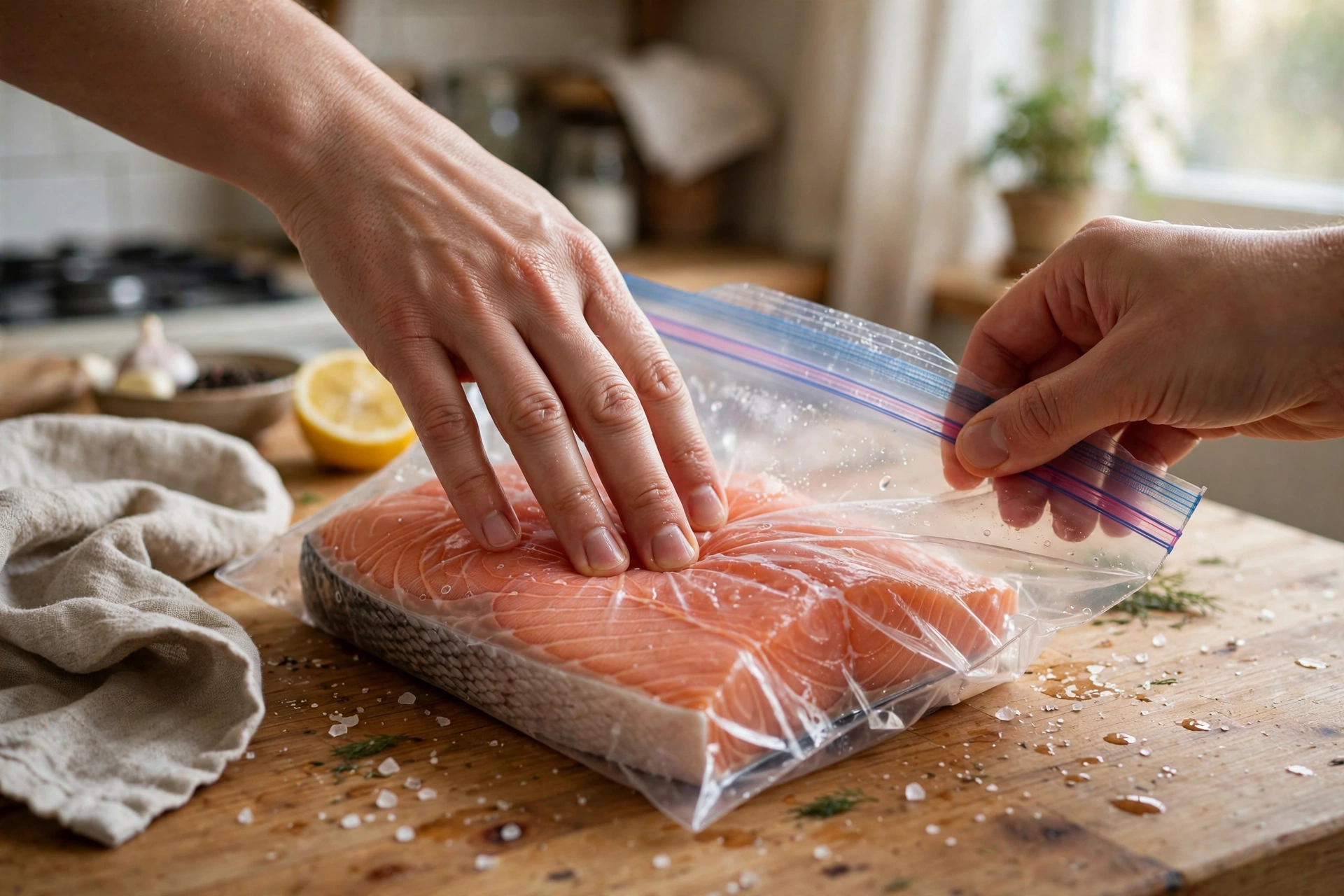
A vacuum style seal gives salmon its happiest storage, since the air truly leaves the package. Without one, roll the bag slowly from the bottom to push air out before sealing. Another old trick is glazing: dip the frozen fillet in cold water, freeze it briefly, and repeat so a thin ice coat armors the surface.
Dry fish freezes cleaner. Water on the surface becomes frost, and frost pulls moisture out of the flesh as the weeks pass.
What About Skin On, Skin Off and Smoked Salmon?
Freezing salmon with the skin on is perfectly fine and often helpful. The skin guards one side of the flesh, keeps the fillet in one piece and comes away easily after cooking. If you plan to crisp the skin later, freeze skin on and pat it extra dry before it goes into a hot pan.
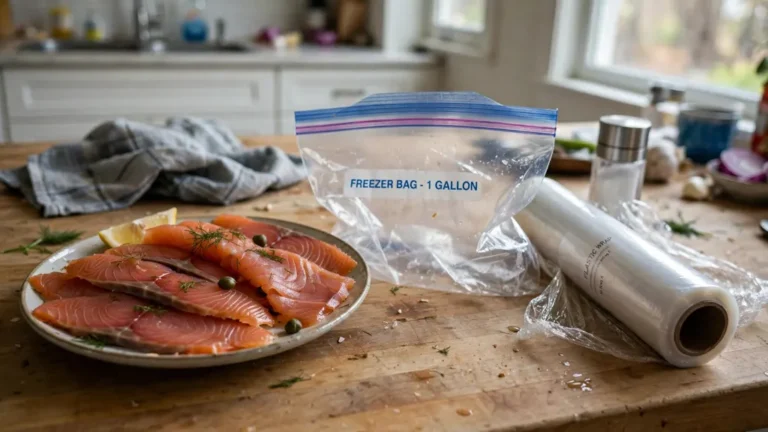
Smoked salmon freezes well for about 2 months. Wrap slices tightly in small packs, since the silky texture softens after thawing. Use thawed smoked salmon in cooked dishes, scrambles and warm pasta when a little softness is welcome, and keep the prettiest fresh slices for serving cold.
Cooked Salmon and Leftovers
Cooked salmon freezes for about 2 to 3 months, the same window as raw. Cool leftovers quickly, wrap portions tightly and freeze them the same day for the best flavor. Flaked cooked salmon is especially handy because it thaws fast and drops into many dishes.
The same portion habit keeps other cooked proteins useful, and our guide to freezing cooked chicken shows the same chill, wrap and label routine for poultry. For salmon, gentle reheating protects the texture: warm it low and briefly so the flesh stays moist instead of drying into chalk.
How Long Does Salmon Keep at Its Best?
Use salmon within about 2 to 3 months for the best flavor. It stays safe longer while frozen solid, but the oils slowly lose their sweetness and the flesh can dry at the edges.
- Raw salmon fillets: About 2 to 3 months at their best.
- Cooked salmon: About 2 to 3 months in tight portions.
- Smoked salmon: About 2 months, with a softer texture after thawing.
- Salmon frozen in loose wrap: Safe, but dries and tastes fishy sooner.
Label the date plainly and use the oldest packages first. Salmon is too good to lose at the back of the freezer.
Thawing Salmon Safely
The fridge is the kindest way to thaw salmon. Keep it in its wrapping on a plate or tray, since fish can drip as it softens. A thin fillet may thaw in several hours, while a thick portion can take overnight.
Cold water is the faster route when dinner is close. Seal the salmon in a leak proof bag, sink it in cold water and change the water every 30 minutes. Cook it soon after it softens. Never thaw salmon on the counter, because the outside warms into the danger zone while the center is still icy.
Avoid freezing raw salmon again after it has fully thawed. Each round of freezing softens the flesh and fades the flavor. If thawed salmon has not been cooked yet and plans change, cook it first, cool it, and then freeze the cooked fish instead.
What Makes Salmon Taste Fishy After Freezing?
- Freezing it late: Fish frozen on its last good day thaws tired.
- Leaving store wrap on: Thin packaging lets air reach the flesh.
- Skipping the pat dry: Surface water becomes frost that dries the fillet.
- Freezing one huge piece: Thick packs thaw slowly and unevenly.
- Thawing on the counter: The outside warms while the center stays frozen.
- Keeping it too long: The oils turn strong and the flavor dulls.
Best Ways to Use Frozen Salmon
Thawed salmon fillets bake, grill and pan fry almost like fresh when they were wrapped well. Season simply and cook until the flesh just flakes, since salmon dries quickly past that point. Skin on fillets crisp beautifully in a hot pan, while skinless portions suit curries and tray bakes.
Cooked frozen salmon flakes into salmon cakes, pasta, fried rice, salads and creamy soups. Smoked salmon that has been frozen loves warm homes too: fold it into scrambled eggs, stir it through pasta, or tuck it into a warm bagel where softness feels natural.
Frequently Asked Questions
Can you freeze salmon with the skin on?
Yes, and many cooks prefer it. The skin protects one side of the flesh, helps the fillet hold together and removes easily after cooking. Wrap skin on portions just as tightly as skinless ones.
How long does smoked salmon keep in the freezer?
About 2 months for the best quality. Wrap slices tightly in small packs and thaw them in the fridge. The texture turns softer, so thawed smoked salmon is lovely in scrambles, pasta and other warm dishes.
Can you refreeze salmon after thawing?
Raw salmon that has fully thawed should not go back into the freezer as it is. The texture suffers and the flavor fades. Cook it first, cool it well, and then freeze the cooked salmon in portions instead.
Is frozen salmon as good as fresh?
Wrapped tightly and used within 2 to 3 months, frozen salmon cooks up very close to fresh, with firm flesh and clean flavor. Salmon that sat around before freezing, or stayed frozen far too long, will taste noticeably duller.
Can you cook salmon straight from frozen?
You can, though the result is less even. Thin fillets can bake from frozen with extra time, but the outside may overcook before the center softens. For the best texture, thaw in the fridge or in cold water first.
Conclusion
Salmon freezes well for about 2 to 3 months when each portion is dried, wrapped tight and labeled honestly. The fatty flesh asks for a shorter stay than lean fish, but careful wrapping keeps the flavor sweet and clean. Thaw it slowly, cook it gently, and a good fillet is never wasted.