Can You Freeze Sourdough Starter?
Quick Answer
Yes, you can freeze sourdough starter, and a well fed starter keeps for about 3 to 6 months in the freezer as a backup for your everyday jar. Feed it first and let it grow bubbly and active, then freeze a small amount in a sealed jar with headspace or spread thin in a freezer bag. When you need it, thaw it in the fridge, pour off any dark liquid and feed it a few times over a day or two until it bubbles and doubles again. Frozen starter is a safety net for travel, busy seasons or a lost jar, not a replacement for the lively starter you bake with each week.
What Actually Happens to Starter in the Freezer?
A starter is a small crowd of wild yeast and friendly bacteria living in flour and water. Freezing does not kill the whole crowd, but it does slow it to a deep sleep, and some of the yeast will not wake up again.
The bacteria tend to survive the cold better than the yeast. That is why a thawed starter often smells sharp and hungry at first, because the balance is off until fresh feedings help the yeast rebuild.
With food and warmth, the survivors multiply quickly. Most healthy frozen starters bubble again after a few feedings, though a very old or weak freeze can take longer and rise more slowly at first.
What Is the Best Way to Freeze Sourdough Starter?
Freezing starter at its happiest gives it the best chance later. A hungry, thin starter that has gone long past its last meal has less strength stored for the cold months.
- Feed your starter as usual and let it sit at room temperature.
- Wait until it is bubbly, risen and near its peak, which is when it is most active.
- Stir it down and spoon a small amount into a clean jar or a freezer bag.
- Leave headspace in a jar, because the starter can expand slightly as it freezes.
- For a thin backup, spread starter in a thin layer inside a freezer bag and press out the air.
- Label it with the date and the flour you feed it.
- Freeze at 0°F and plan to revive it within about 3 to 6 months.
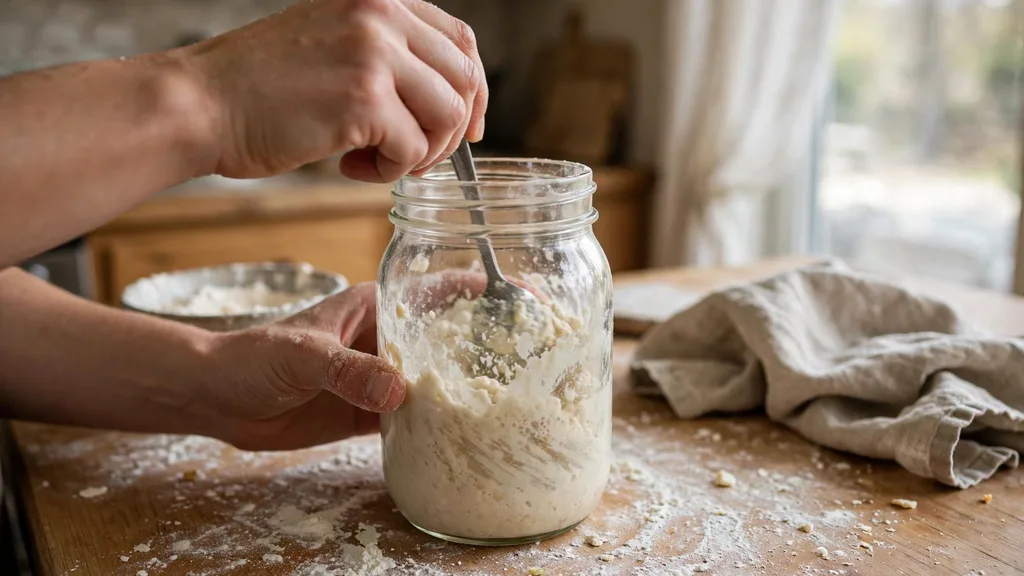
A thin frozen sheet thaws much faster than a full jar, so many bakers keep one flat bag behind the everyday jar. Dried starter flakes are the other classic backup, and they keep even longer when stored dry and sealed.
How Long Can Frozen Starter Stay Good?
Frozen starter does not spoil in the usual way, but its strength fades with time. A younger freeze revives with spirit, while an old one may need patience.
- Starter frozen at its bubbly peak: About 3 to 6 months, reviving after a few feedings.
- Thin frozen sheet in a flat bag: About 3 to 6 months, thawing fast for a quick restart.
- Hungry starter frozen without a fresh feed: About 1 to 3 months, with a slower and weaker revival.
- Dried starter flakes stored sealed and dry: Many months longer than wet starter, as a deep backup.
If a thawed starter still shows no bubbles after several warm feedings, it may be too weak to save. In that case a dried backup or a fresh start from flour and water is the honest path.
How Do You Revive Starter After Freezing?
Thaw the starter in the fridge or on the counter until it pours or spoons easily. It may have a layer of dark liquid on top, which is a sign of hunger rather than ruin, so pour it off or stir it in.
Feed the starter with fresh flour and water, then keep it warm and watch it. Discard about half before the next feeding and feed again, because repeated fresh meals dilute the sharp acids and give the yeast room to grow.
Most revived starters double and smell pleasantly tangy within a day or two of steady feedings. Bake only after the starter rises on a predictable schedule, since a sluggish starter makes heavy bread.
Should You Freeze Starter or Just Refrigerate It?
The fridge suits short pauses. A fed starter can rest cold for a week or two between bakes and come back with one or two feedings, so most weekly bakers never need the freezer.
Freezing is for long breaks, travel, moves or insurance against dropping the jar. Serious bakers often keep both, with a jar in the fridge for baking and a flat frozen bag behind it in case anything goes wrong.
Drying is the third road, and it travels best of all. A spoonful spread thin, dried until crisp and sealed away gives you a backup that can cross a long season without any power at all.
What If the Revived Starter Still Seems Sluggish?
Give it warmth and regular meals before you judge it. A starter waking from the freezer likes a steady warm spot, fresh flour at each feeding and a consistent schedule, because irregular feedings keep the yeast guessing.
A spoonful of whole grain flour in the mix can help, since it carries more wild yeast and food for the culture than white flour alone. Many bakers see sleepy starters wake up within a feeding or two of that change.
If bubbles come but the starter never doubles, keep discarding and feeding rather than baking. A starter that rises halfway and stalls will still make heavy bread, so patience at this stage saves a disappointing loaf later.
Frequently Asked Questions
Can you freeze sourdough starter in a glass jar?
Yes, but leave clear headspace and do not fill the jar to the top. The starter can expand as it freezes, and glass needs room so it does not crack. A freezer bag spread thin thaws faster and takes less space.
How long does frozen starter take to become active again?
Most starters bubble within a day or two of regular warm feedings after thawing. A starter frozen longer or frozen hungry can take a few extra days. Wait until it rises and doubles in a steady rhythm before baking bread with it.
Can you bake with starter straight from the freezer?
No, frozen starter needs thawing and feeding first, because much of its yeast is asleep or gone. Baking with it too soon gives flat, heavy loaves. Feed it until it is clearly bubbly and strong, then bake.
Can you freeze sourdough discard?
You can, but discard is usually weaker because it is unfed and acidic, so it revives more slowly. If the discard is meant for pancakes or crackers soon, the fridge is fine. Freeze discard only as a backup and expect it to need extra feedings.
Why does thawed starter smell so strong?
That sharp, almost solvent smell means the starter is hungry and the acids built up while the yeast slept. Pour off the dark liquid, feed it fresh flour and water, and the smell softens as the balance returns. It is a call for food, not a sign to throw it away.
Conclusion
Sourdough starter freezes well as a backup for about 3 to 6 months when you freeze it fed and bubbly, then thaw and feed it back to strength. It will not replace your lively everyday jar, but it can save your baking after a trip, a move or a dropped jar. Keep one flat bag frozen, and your starter is never truly lost.