Can You Freeze Gravy?
Quick Answer
Yes, you can freeze gravy for about 4 to 6 months, and it freezes best when it cools fully first and goes into small portions with a little headspace, because gravy expands as it turns to ice. Flour based gravy can separate a bit in the cold, but a steady whisk while you reheat it gently brings it back together, so it is ready for potatoes, biscuits, and leftover meat whenever you are.
Why Some Gravy Separates in the Freezer
Gravy is a team of starch, fat, and seasoned liquid, and the cold pulls that team apart. The starch that made it thick can weep water as it thaws, while little beads of fat rise and sit on top. The result looks broken, even though nothing has gone wrong that heat and a whisk cannot fix.
Flour gravy is the most likely to separate, because its starch network is delicate. Gravy thickened with a long cooked roux tends to hold together better, and gravy that was smooth and glossy going into the freezer usually comes back smooth too. Freezing does not ruin gravy, it just asks for a patient reheat.
Cream gravy needs a little more care. Dairy can turn grainy after freezing, so cream gravy has a shorter window of best quality and wants the gentlest heat when it returns to the stove.
How to Freeze Gravy in Small Portions
Hot gravy should never go straight into the freezer. Steam warms the foods around it, and thick gravy in a deep pot cools slowly through the middle, which is not good for quality.
- Let the gravy cool fully, then chill it in the fridge.
- Skim off any hard fat from the surface if you like.
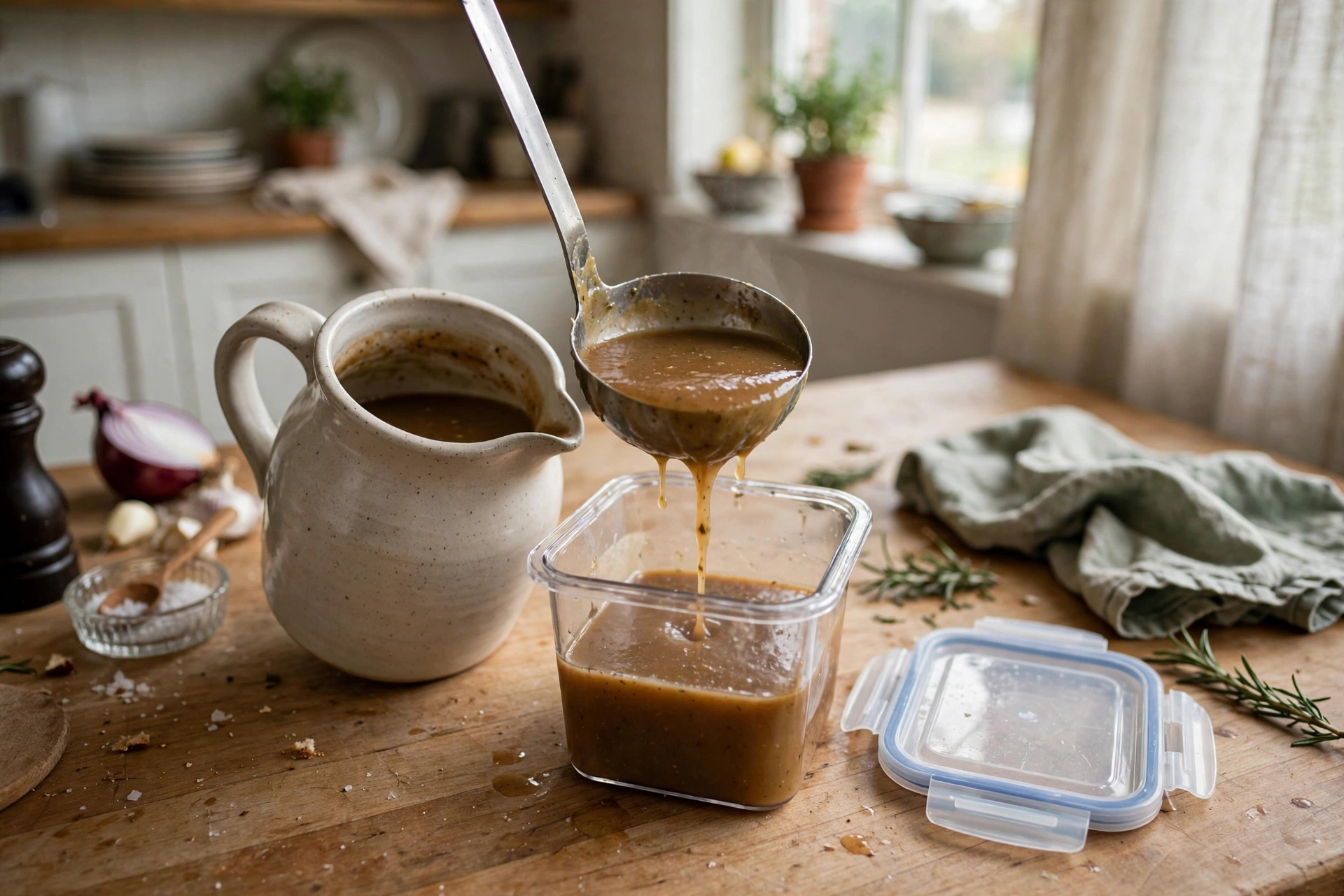
- Ladle the gravy into small containers or freezer bags.
- Leave a little headspace at the top for expansion.
- Label each portion with the kind of gravy and the date.
- Freeze flat if you used bags, or upright in containers.
Small portions are the whole game. A flat bag thaws under warm water in minutes, while a frozen brick holds dinner hostage. Think about how gravy gets used, a cup for biscuits, a little for leftovers, and freeze those amounts on purpose.
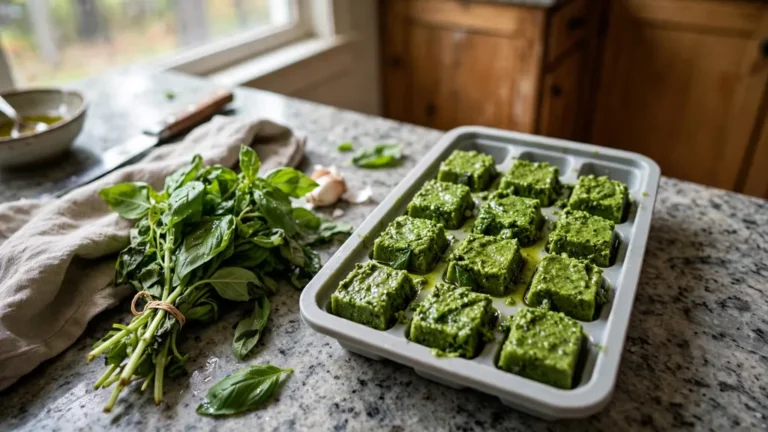
Ice cube trays are perfect for tiny amounts. Freeze the gravy solid in the tray, pop the cubes into a bag, and you have spoon sized portions ready to melt into pan sauces, soups, and reheated meat. Two or three cubes can rescue a dry plate of leftovers without opening a whole container.
How Long Gravy Keeps Well
Most meat gravies share the same generous window. The flavor slowly softens with time, so older gravy is best used where other strong flavors share the plate.
- Turkey gravy: About 4 to 6 months for the best flavor.
- Chicken gravy: About 4 to 6 months.
- Beef gravy: About 4 to 6 months, with a deep flavor that holds well.
- Cream gravy: About 2 to 3 months, since dairy turns grainy sooner.
- Gravy frozen in cubes: About 4 to 6 months once bagged.
These are quality times. Gravy that went into the freezer fresh and stayed frozen stays safe, but the taste is brightest inside these windows.
Labels matter more than usual here, because turkey, chicken, and beef gravy all look like twins once frozen. Write the kind and the date where you can see them.
One Method for Turkey, Chicken, and Beef
All three gravies freeze by the same rules, because they are built the same way. Cool fully, portion small, leave headspace, label clearly. The only difference is how you use them later, and that part is pleasantly flexible.
Holiday turkey gravy is the classic freezer save, since the big meal always makes more than the day needs. Chicken gravy loves weeknight work over rice or potatoes, and beef gravy turns a plain reheated roast into something that feels cooked on purpose.
Gravy frozen beside portions of freezing cooked chicken makes an easy second meal almost cook itself, since both thaw in the fridge overnight and meet again in a warm pan.
Thawing and the Whisk Trick
Thaw gravy in the fridge overnight, or set a sealed bag in a bowl of cool water when dinner is closer than that. Small cubes can melt straight into a warm pan, which is the fastest path of all.
Reheat it slowly over low heat and whisk from the start. At first the gravy may look separated and a little sad, but as it warms, the starch loosens, the fat melts back in, and the whisk pulls it into one smooth sauce again. A splash of broth, milk, or water helps if it comes back thicker than you remember.
Keep the heat gentle and stop before a hard boil. Boiling can break the sauce again and turn the texture grainy, especially in gravy that contains cream. Taste at the end and fix the seasoning, because freezing can soften salt and pepper a little.
Mistakes That Make Gravy Disappointing
- Freezing it warm: Steam and slow cooling hurt quality and the foods nearby.
- Filling to the brim: Gravy expands, and lids pop or containers crack.
- One huge batch: A giant frozen block takes forever to thaw.
- Reheating at a hard boil: High heat breaks the sauce and makes it grainy.
- Skipping the label: Frozen gravies all look alike in the cold.
- Giving up at the first stir: Separated gravy usually comes back with heat and whisking.
Another quiet mistake is freezing gravy that sat out through a long holiday meal. When in doubt about how long it rested at room temperature, let it go.
Best Uses for Frozen Gravy
Frozen gravy turns plain leftovers into a second dinner with almost no work. Pour it over freezing mashed potatoes, warm sliced meat, rice, or a plate of biscuits, and everything tastes freshly cooked again.
The little cubes have their own career. Melt them into the pan when you reheat meat, stir them into soups and stews, or whisk them into the drippings of a weeknight roast. A small amount of gravy brings moisture and seasoning anywhere it lands.
Think of the freezer stash as sauce on standby. The next time a meal comes out a touch dry, you will not need to start a roux from nothing.
Frequently Asked Questions
Can you freeze gravy made with flour?
Yes, flour based gravy freezes well for 4 to 6 months. It may separate as it thaws, because the starch lets go of some water, but gentle heat and steady whisking pull it back into a smooth sauce.
Can you freeze gravy in an ice cube tray?
Yes, and it is one of the best ways to save small amounts. Freeze the gravy solid in the tray, pop the cubes into a freezer bag, and melt a few into pan sauces, soups, or reheated meat whenever you need them.
Why did my gravy separate after freezing?
Freezing pushes the fat and liquid apart, and the starch can release water as it thaws. It looks broken but it is normal. Warm it slowly and whisk the whole time, and it should come back together smoothly.
Can you freeze cream gravy?
Yes, but give it a shorter window of about 2 to 3 months and reheat it very gently. Cream can turn a little grainy after freezing, so low heat and constant stirring matter even more than with plain gravy.
How long does thawed gravy keep in the fridge?
Use thawed gravy within 3 to 4 days and keep it covered and cold. Reheat it until it is steaming hot all the way through, and do not freeze it a second time if it has already been reheated.
Conclusion
Gravy freezes like it was designed for it. Cool it fully, portion it small, leave a little headspace, and it waits 4 to 6 months for the next plate of potatoes or biscuits. If it separates, heat and a whisk will bring it home. Label the kind, and future you will be grateful.