Can You Freeze Mashed Potatoes?
Quick Answer
Yes, you can freeze mashed potatoes for up to 10 to 12 months while frozen solid. Quality is best in the first 1 to 2 months. Fat rich mash with butter and cream reheats smoothest.
What Kind of Mash Freezes Best
The recipe you start with decides the result after thawing. Water is the main enemy of a smooth texture.
Mash with butter and cream: This holds up best. Fat coats the starch and limits water separation during reheating.
Mash with only milk and no fat: This turns watery and grainy after freezing. Stirring helps, but the bite stays thin.
Mash with roasted garlic or cheese mixed in: These freeze fine. Add fresh herbs after reheating so the flavor stays bright.
If you plan a freezer batch, cook the base from good potatoes and season lightly. You can adjust salt at serving time after reheating.
Freezing Mashed Potatoes Step by Step
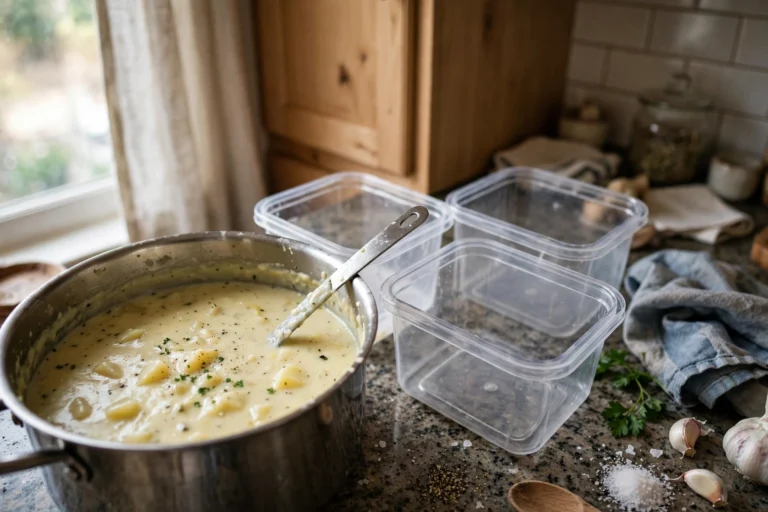
Cool the mash fully before you pack it. Warm mash traps steam and forms ice that ruins texture.
Follow these steps:
Step 1: Cook and mash while hot with butter and cream until smooth.
Step 2: Let the mash cool to room temperature within 2 hours, then chill in the fridge for 30 minutes.
Step 3: Scoop single portions onto a lined tray, about 1 cup per mound.
Step 4: Freeze the tray until each mound is solid, about 2 to 3 hours.
Step 5: Move the frozen mounds into airtight bags, press out extra air, and flatten the bag a little.
Step 6: Label with the date and return the bag to the freezer at 0°F.
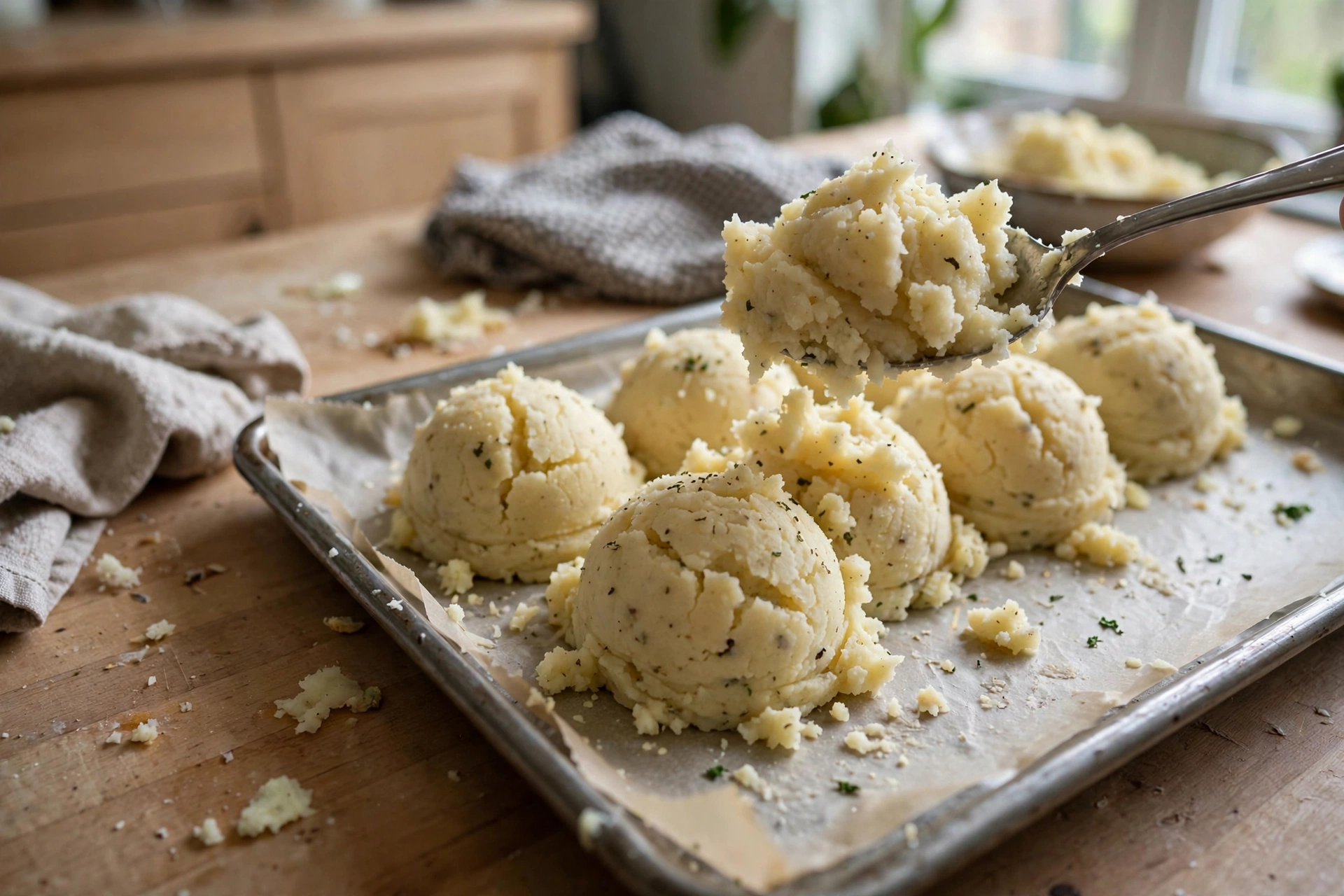
You can also freeze a full batch in one container. Leave a small space at the top because the mash expands a little as it freezes. Portions thaw faster and waste less.
A little extra butter folded in before freezing pays off later. It keeps the reheated mash rich without extra work at serving time.
How Long Mashed Potatoes Last Frozen
Frozen at 0°F, mashed potatoes stay safe while frozen solid. USDA FoodKeeper style guidance lists cooked potato dishes for long freezer storage, and many home charts put mashed potatoes at 10 to 12 months for safety based storage.
Quality tells a shorter story. The first 1 to 2 months give the creamiest result. After that the texture slowly turns loose and the flavor dulls, even in a well sealed bag.
Fridge life after thawing is 3 to 4 days. Keep the container covered and reheat only the portion you will serve.
If you like a quick reference for other sides, our freezer storage times chart keeps the main times in one place.
Reheating Without a Watery Texture
Slow gentle heat works best. High heat splits the mash and pushes water out.
Oven method: Place thawed or frozen mash in a covered dish. Warm at 350°F until hot in the center, stir once halfway, then fold in a splash of warm milk if needed.
Stovetop method: Warm thawed mash in a pot over low heat. Stir often and add warm milk a spoon at a time until the texture looks glossy again.
Microwave method: Heat in short bursts and stir between each burst. Stop as soon as the mash is steaming so it does not dry at the edges.
Cream cheese or sour cream stirred in at the end can rescue a loose batch. Start with a small spoonful and taste before adding more.

Why Some Frozen Mash Turns Grainy
Potato starch swells with water during cooking. Freezing pushes water out of the starch network. On reheating, that water can pool instead of binding back in.
Low fat recipes suffer most because nothing helps the water blend back. Yukon Gold potatoes also help. Their naturally creamy flesh stays smoother than very dry floury types after freezing.
Overworking hot mash with a high speed mixer can make it gluey before freezing. That gluey feel gets worse after thawing. Mash by hand or on low speed for the best base.
Can You Freeze Mashed Potatoes Again?
You can refreeze mashed potatoes that thawed in the fridge and were then reheated to steaming hot. Cool the reheated portion fast, pack it clean, and freeze once more.
Do not refreeze mash that sat on the counter for hours. Do not refreeze mash that was already reheated and served at the table and sat out during a long meal.
Each extra freeze cycle makes the texture softer. It is better to freeze small portions from the start so a second freeze is rarely needed.
Mistakes That Ruin Frozen Mash
Small choices before freezing show up clearly after reheating.
Mistake 1: Packing hot mash straight into a bag. Steam becomes ice and the thawed mash weeps water.
Mistake 2: Using skim milk only with no butter. The result tastes flat and thin.
Mistake 3: Freezing one huge block. The center thaws slowly and the edges overcook during reheating.
Mistake 4: Skipping the label. Old bags lose flavor and you cannot judge age at a glance.
Mistake 5: Reheating on high heat without stirring. Hot spots dry out while the middle stays cold.
Mistake 6: Adding fresh herbs before freezing. Most herbs darken and lose punch. Add them after reheating.
How to Tell Mashed Potatoes Have Spoiled
Frozen mash rarely spoils while solid, but thawed mash has a short fridge life. Trust smell and look before taste.
Watch for these signs:
Sign 1: A sour smell that grows stronger after warming.
Sign 2: Gray or pink patches or any fuzzy mold on the surface.
Sign 3: A slimy film that does not stir away.
Sign 4: A sharp off taste in a tiny test bite.
Severe freezer burn alone means poor quality, not spoilage. Trim dry white patches if the rest smells fine, or discard the portion if the flavor is dull throughout.
Frequently Asked Questions
Can you freeze mashed potatoes made with almond milk?
You can, but the texture turns thinner after thawing. Add a spoon of olive oil or vegan butter before freezing to help the body, and stir well while reheating.
Can you freeze store bought refrigerated mashed potatoes?
Yes, if the package is unopened and fresh. Portioning after opening works better for most homes because you thaw only what you need.
Do mashed potatoes freeze well in a slow cooker meal?
Cooked mash added at the end of slow cooking freezes fine as part of leftovers. Cool the meal fast, pack in portions, and use within 2 to 3 months for best taste.
Can you freeze mashed sweet potatoes?
Yes. Add butter and a pinch of salt, cool fully, portion, and freeze. The color stays bright and the texture reheats smoothly with gentle stirring.
Why is my reheated mash gluey?
The potatoes were likely overworked while hot or reheated too fast. Next time mash gently, freeze in portions, and warm slowly with warm milk folded in at the end.
Can babies eat frozen mashed potatoes?
Plain mash without added salt freezes well in small cubes. Thaw in the fridge, reheat until steaming, cool to a safe serving temperature, and serve fresh.
Conclusion
Make the mash rich, cool it fast, freeze it in portions, and reheat it gently. With those habits, a freezer bag of mash becomes an easy side that tastes close to fresh on a busy night.
Sources: Storage times and methods follow USDA FoodKeeper style guidance and USDA cold food storage charts.