Can You Freeze Cabbage?
Quick Answer
Yes, you can freeze cabbage. Blanched cabbage keeps best quality for up to 9 months. Raw cabbage freezes too, but use it within about 2 months and only in cooked dishes.
Raw or Blanched: Which Works Better
You have two ways to freeze cabbage. The right one depends on how long it will stay frozen.
- Raw cabbage: quick to prep, best used within about 2 months, suits soups and cooked dishes only
- Blanched cabbage: takes a short boil first, keeps colour and flavour far better over time
- Cooked cabbage: freeze leftovers in their sauce, good for quick meals later
For anything over two months, blanching wins. The short boil stops the enzymes that dull colour and flavour in the freezer. Raw works when the plan is near. If a soup is coming this month, raw bagged cabbage is enough and saves the boiling step.
How to Freeze Cabbage Step by Step
Start with a firm, heavy head. Loose or yellowing leaves will not improve in the freezer.
Follow these steps:
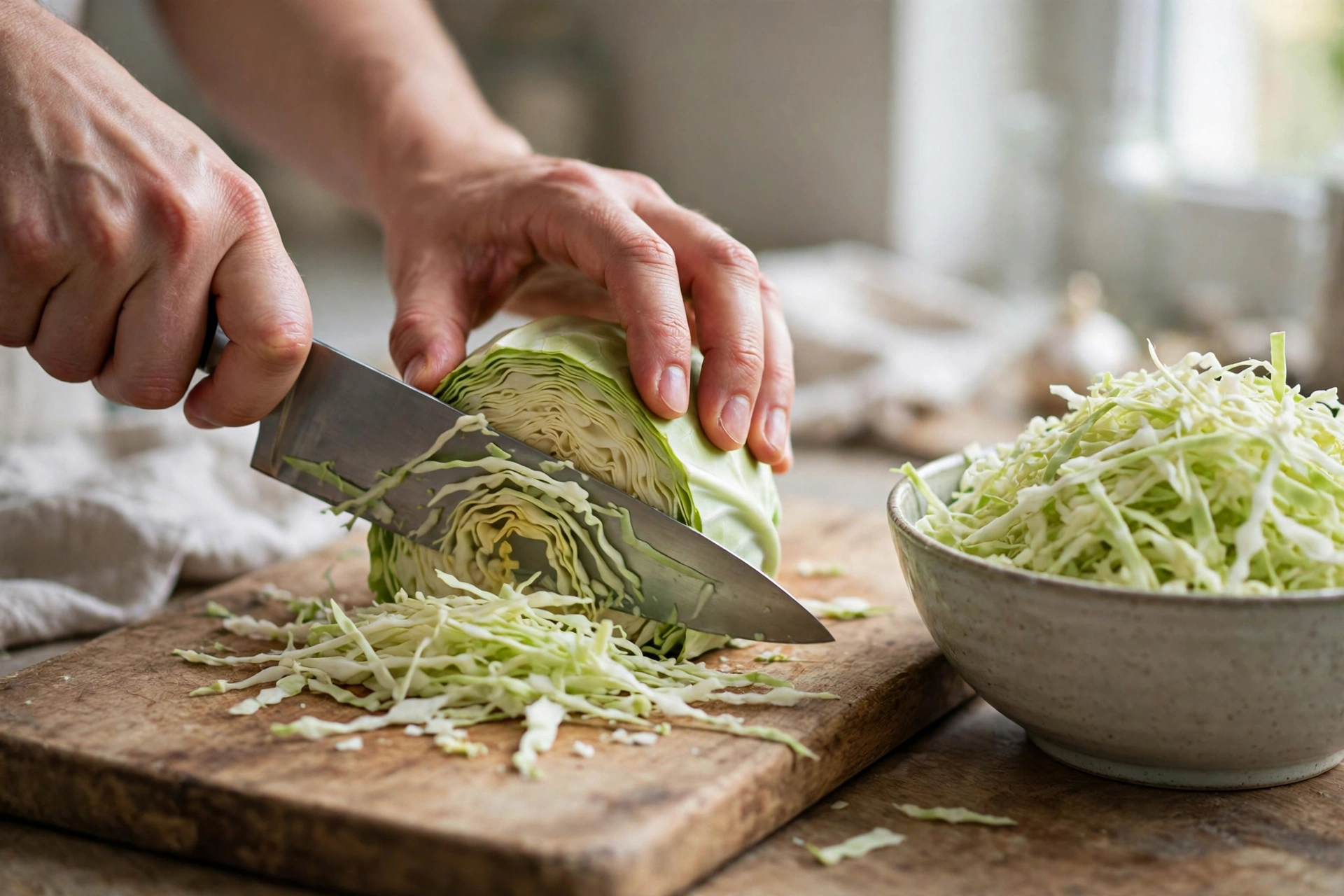
- Clean the head: remove the coarse outer leaves and rinse the cabbage well
- Cut your shape: shred it, cut wedges or pull leaves apart, based on how you cook
- Boil briefly: drop the cabbage into boiling water, about 1 and a half minutes for shreds and wedges
- Cool it fast: move it straight into a bowl of ice water for the same time
- Drain very well: squeeze out extra water, wet cabbage turns icy and soft later
- Bag in portions: fill freezer bags with meal size amounts and press the air out
- Mark and freeze: write the date on each bag and lay them flat
Dry cabbage freezes far better than wet cabbage. Take an extra minute with the draining step. That minute saves the texture later. The same is true for celery, which also blanches before freezing.
Wedges hold their shape best for braises. Shreds suit soups and pan dishes. Pick one shape per bag so cooking stays simple.
How Long Does Cabbage Keep in the Freezer?
- Blanched cabbage: best quality for up to 9 months at 0°F
- Raw cabbage: best used within about 2 months
Those times are about quality. Frozen cabbage stays safe while it stays frozen. Old cabbage slowly loses its sweet flavour.
Fridge time is short once thawed. Use thawed cabbage within 2 to 3 days. Keep it cold and covered the whole time. The freezer storage times chart shows cabbage beside the other vegetables you freeze with it.
Using Frozen Cabbage in Cooking
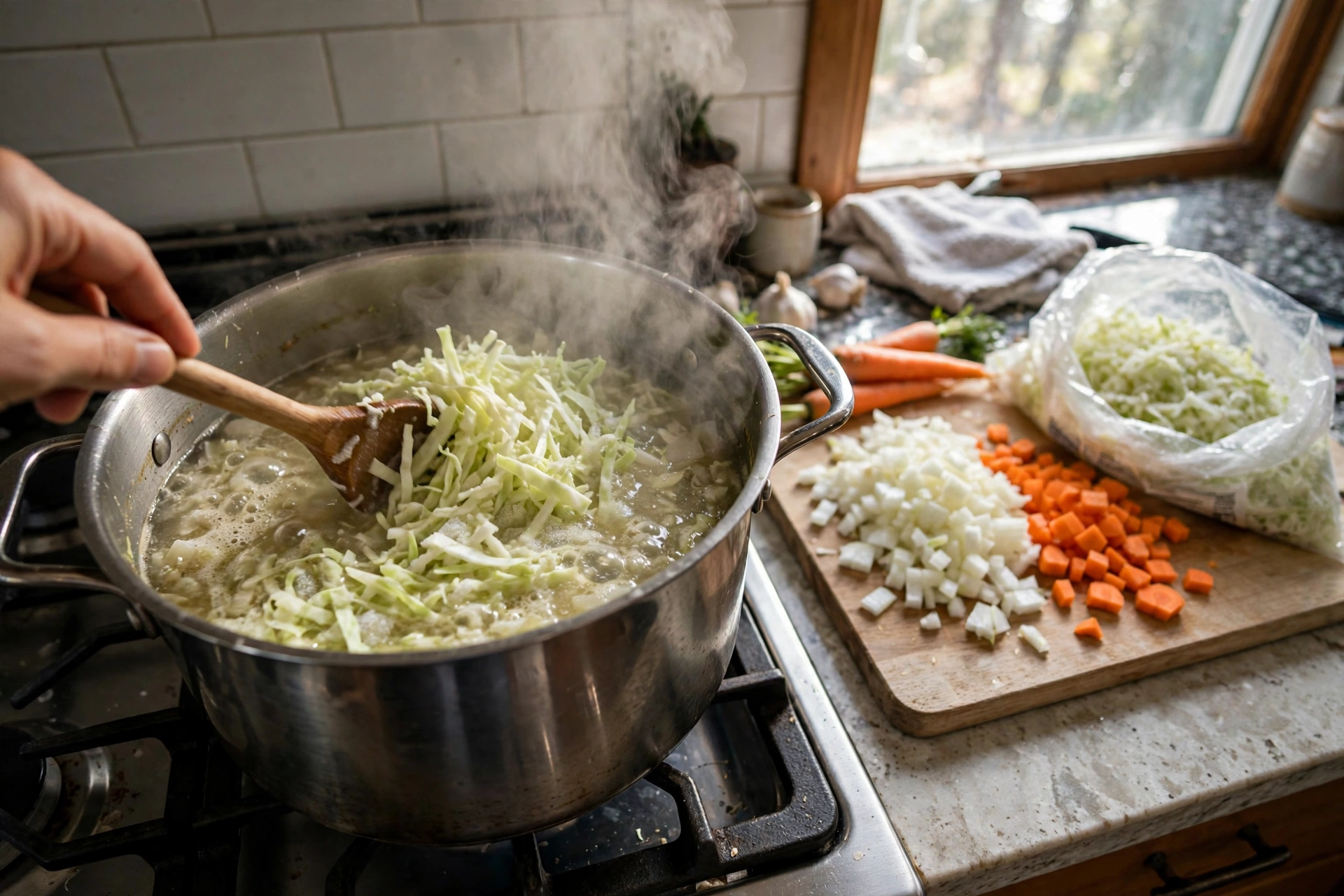
Shredded cabbage can cook from frozen. Tip it into soups, stews and noodle pans. It softens fast in hot liquid. Soup bases often pair it with onions, which need no blanching at all.
Thaw first for pan dishes. Frozen shreds release water in a hot pan. That water stops them browning well.
Wedges need a head start. Steam or boil them a few minutes from frozen. Then finish them in a pan or oven dish.
What Happens to the Texture
Cabbage holds a lot of water. Freezing breaks some of its cell walls. Thawed cabbage feels soft and limp next to fresh.
That rules out crunchy raw dishes. Fresh slaw needs fresh cabbage. Frozen leaves will not give you that bite.
Cooked dishes hide the change well. Soups, braised wedges and cabbage rolls all work. In rolls, soft leaves are even easier to wrap than fresh ones.
Can Frozen Cabbage Be Frozen Again?
Avoid refreezing thawed raw cabbage. The leaves go very soft. Flavour fades fast.
A cooked dish is different. Cabbage soup or a braise that used thawed cabbage can freeze again as a finished meal. Cool it fast before it goes back in.
Match bag size to meal size. Then you thaw one bag and use it all. Nothing needs a second freeze.
Common Freezing Mistakes With Cabbage
- Skipping the blanch for long storage: raw cabbage dulls in colour and flavour after about 2 months
- Bagging it wet: extra water forms ice and makes thawed leaves soggy
- Freezing a whole head as is: the centre freezes slowly and the leaves tear on thawing, unless you plan cabbage rolls
- Leaving air in the bag: air brings freezer burn and stale tastes
- Cutting huge wedges: thick pieces blanch unevenly and cook unevenly later
The blanch and the drain matter most. Get those two right and cabbage freezes very well.
Leaves for rolls are the one whole head exception. Freeze the head, thaw it a day ahead, and the leaves peel off soft and ready. That trick saves the usual boiling step.
Signs Frozen Cabbage Is Past Its Best
Check the colour first. Good frozen cabbage stays pale green. Grey or yellow patches point to old storage.
Smell the bag as it thaws. Fresh cabbage smells mild and sweet. A sour or strong sulphur smell means throw it out.
Feel the leaves too. Soft is normal after freezing. Slimy is not. Slime means the cabbage is done.
Frequently Asked Questions
Can you freeze cabbage rolls?
Yes, and they freeze very well. Fill and roll the leaves, then freeze them raw or cooked in their sauce. Cook raw frozen rolls gently until hot all through. Freeze in meal size trays so nothing is wasted.
Can you freeze red cabbage the same way?
Yes. Red cabbage blanches and freezes like green cabbage. Its colour can bleed a little into cooking water. Bag red cabbage apart from green so colours stay clean.
Can you freeze Chinese cabbage and bok choy?
You can, but they go softer than firm green cabbage. Blanch leaves for about 1 minute only. Use them in soups and noodle dishes where soft leaves fit well.
Does frozen cabbage lose its nutrients?
Blanching costs a small amount of vitamin C. The rest keeps well while frozen. A short blanch protects more nutrients than a long one, so watch the clock.
Can you freeze cabbage soup?
Yes. Cabbage soup freezes for up to 3 months with good flavour. Cool it fast and leave space at the top of the container. The liquid expands as it freezes.
Why does thawed cabbage smell strong?
Cabbage has natural sulphur in it. Freezing and thawing can make that smell louder. A rinse in cold water calms it. If the smell is sour, throw it out instead.
Conclusion
Cabbage freezes well when you blanch it first. Shreds and wedges keep for up to 9 months. Use them in cooked dishes and the soft texture never shows. A firm head and a dry bag do most of the work for you.
Sources: USDA FoodKeeper style storage guidance and USDA freezing guidance for vegetables.