Can You Freeze Asparagus?
Quick Answer
Yes, you can freeze asparagus, and blanched asparagus keeps its best quality for about 10 to 12 months in the freezer. It freezes well when you wash the spears and trim the woody ends first, then blanch them briefly in boiling water and cool them fast in ice water before drying them well and sealing them in a bag. Because frozen asparagus turns softer than fresh, it suits cooked dishes much better than raw salads.
Why Blanching Matters
Blanching is the short boil before freezing, and for asparagus it is worth the few minutes it takes. The heat slows down natural enzymes that would otherwise dull the color, soften the texture, and fade the flavor during months in the freezer.
Blanched asparagus comes out of the freezer bright green and pleasant to eat. Asparagus frozen raw tends to turn dark, limp, and bitter over time.
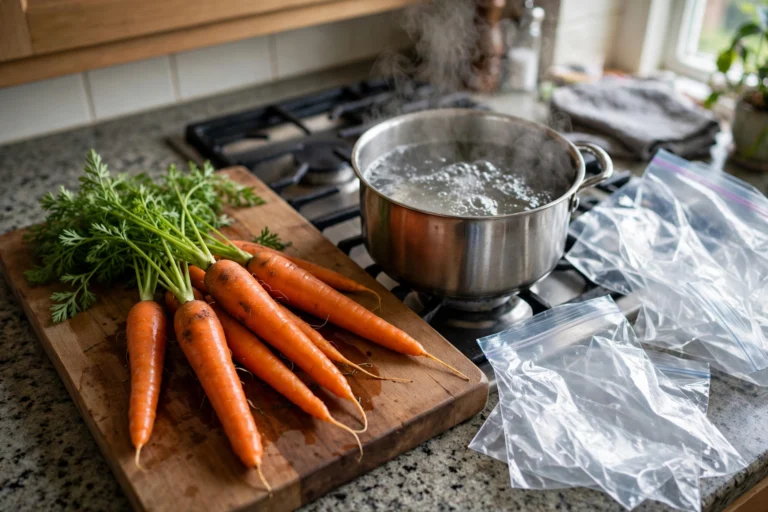
Think of blanching as insurance. It protects all the months of storage that follow. Roots take the same short boil, and freezing carrots in coins gives you a second blanched vegetable for soups and roast trays.
How to Freeze Asparagus Step by Step
- Pick spears that are firm, bright green, and closed at the tip. Avoid limp or woody bunches.
- Rinse the spears under cool water and snap or cut off the tough bottom ends.
- Sort the spears by thickness, since thin and thick spears need different blanching times.
- Boil a large pot of water. Blanch thin spears for about 2 minutes, medium spears for about 3 minutes, and thick spears for about 4 minutes.
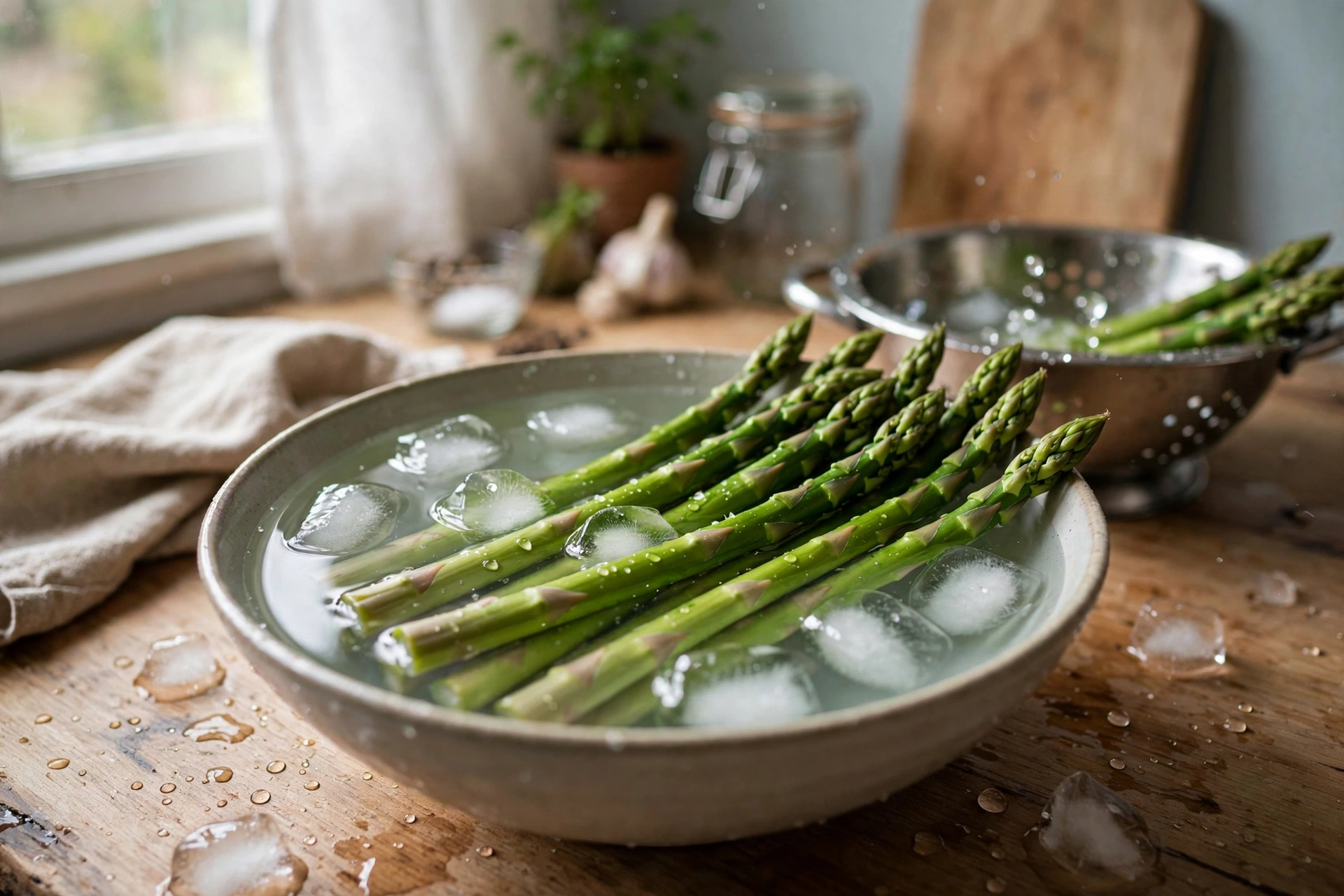
- Move the spears straight into a bowl of ice water for the same amount of time to stop the cooking.
- Drain well and pat very dry with clean towels. Extra water becomes ice and hurts texture.
- Spread the spears on a lined tray in a single layer and freeze for about 2 hours until firm.
- Pack the frozen spears into freezer bags, press out the air, seal, label with the date, and store flat.
Freezing on a tray first also keeps the spears separate, so you can take out just a handful whenever you need them without thawing the full bag.
How Long It Keeps
Blanched asparagus keeps best quality for about 10 to 12 months at 0°F. It remains safe beyond that point, but the color and texture slowly decline.
Write the date on the bag and use older bags first. If you freeze asparagus during its spring peak, you can enjoy it well into the following winter.
Many spring vegetables freeze the same blanch first way, and freezing celery shows the same approach for another crunchy vegetable.
Choosing Spears for the Freezer
Not every bunch freezes equally well. Medium and thick spears hold up best because they keep some bite after blanching and thawing. Very thin spears go soft faster and are better eaten fresh.
Buy asparagus in season when it is firm, fragrant, and fairly priced. Freeze it the same day you buy it if you can. The fresher it goes in, the better it tastes months later when it comes out.
If the tips look dark or mushy on the shelf, skip that bunch. Freezing preserves quality, it does not restore it.
Thawing and Cooking From Frozen
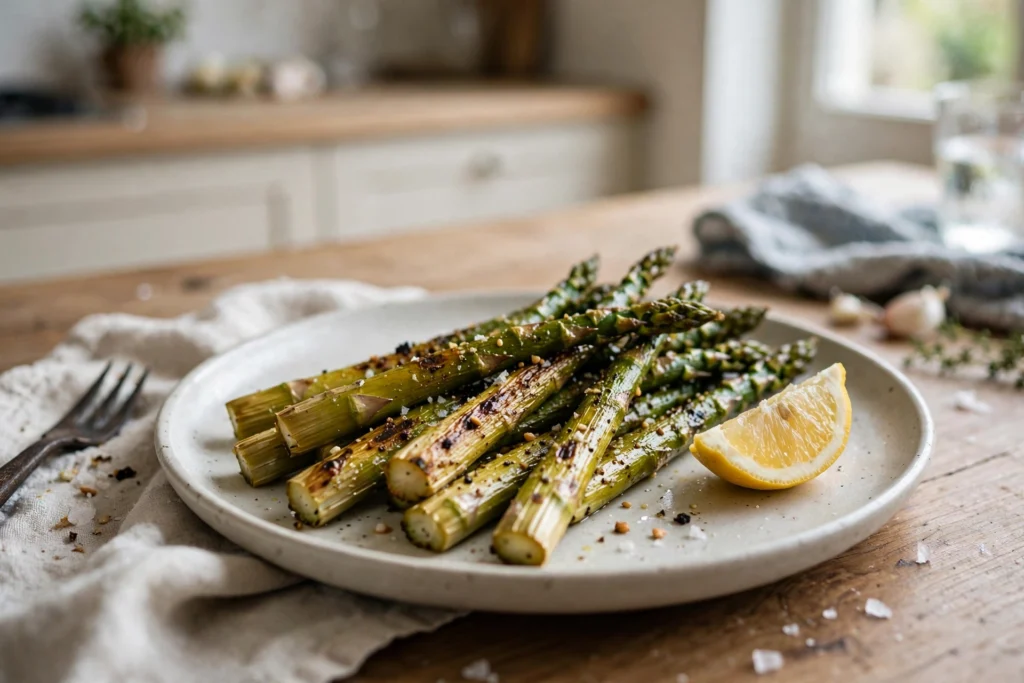
Asparagus does not need a long thaw, so for roasting or grilling you can cook the spears straight from frozen with a little oil and seasoning and just add a few extra minutes to the usual cooking time.
For soups, stir fries, pasta, and casseroles, frozen asparagus can go right into the dish near the end of cooking. It needs only enough time to heat through.
If you want to serve it as a simple side, thaw the spears in the fridge for a few hours, then warm them gently in a pan with butter and garlic. Avoid boiling thawed asparagus for long, since it is already tender and can turn mushy.
What Changes After Freezing
Frozen asparagus will not have the snap of fresh spears, because the texture turns softer and a little more tender, which is completely normal for a vegetable with high water content.
The flavor stays sweet and green when the spears were blanched and dried well. Poorly dried spears can taste watery, so the drying step matters more than most people expect.
Frozen asparagus shines in cooked food. Use it in frittatas, quiches, soups, risotto, pasta, and roasted side dishes rather than raw salads or crudité plates. A roast tray feels complete with sweet peppers too, and freezing bell peppers keeps those pieces ready without any blanching at all.
Mistakes That Ruin Frozen Asparagus
Skipping the blanch: Raw frozen asparagus loses color and flavor fast, so always blanch first.
Wet spears: Water left on the spears forms ice crystals and makes the texture soggy after thawing.
Mixed sizes in one batch: Thin spears overcook while thick spears stay underdone, so sort by thickness before blanching.
Overpacking the bag: A crowded bag freezes slowly and clumps, so pack in flat single layers and press out the air.
Frequently Asked Questions
Can you freeze asparagus without blanching?
You can, but the quality drops within a few months. The spears turn darker, softer, and less sweet. Blanching takes only a few minutes and keeps the spears good for close to a year.
Should asparagus be cut before freezing?
Whole spears freeze well and look nice for roasting. Cut pieces are better for soups and stir fries because they go straight into the pan. Both work, so choose based on how you plan to cook.
Why did my frozen asparagus turn out mushy?
It was likely blanched too long, packed while still wet, or cooked too long after thawing. Keep blanching times short, dry the spears well, and cook from frozen where possible.
Can you freeze cooked asparagus?
Yes, leftover cooked asparagus can be frozen for about 2 to 3 months. The texture will be quite soft afterward, so it works best blended into soups or baked into casseroles.
How can you tell if frozen asparagus has gone bad?
Look for heavy freezer burn, a gray or dull color, and an off smell after thawing. A few pale ice crystals are fine, but sour or stale smells mean it is time to throw it out.
Conclusion
Asparagus freezes beautifully when you blanch it first and dry it well. Put in those few minutes of prep and you will have bright, tasty spears ready for roasts, soups, and pasta for about 10 to 12 months.