Can You Freeze Spinach?
Quick Answer
Yes, you can freeze spinach, and it keeps best for about 10 to 12 months when you blanch it first. A short boil, a plunge into ice water, and a firm squeeze to push the water out are the steps that protect its color and flavor. When you are ready to cook, thaw it in the fridge or drop it straight into soups, eggs, and smoothies, where its softer texture fits right in.
Blanched or Raw, and Why It Matters
Spinach leaves carry natural enzymes that keep working even in the cold. Over a few months those enzymes dull the green color and flatten the flavor, so raw frozen spinach slowly tastes tired. Blanching stops that process. One minute in boiling water, then a shock of ice water, and the leaves stay bright and sweet for the better part of a year.
Raw freezing is still possible when you are in a hurry. The leaves freeze safely and work fine in smoothies or cooked dishes, but the color fades sooner and the flavor is weaker. Treat raw frozen spinach as a short term option and use it within about 6 months. If the spinach matters to the meal, the blanching step is worth the extra few minutes.
Baby spinach blanches the same way, only a touch faster, because the leaves are thinner and more tender. Give baby spinach about half the time in the water so it does not turn limp before it even reaches the freezer.
How to Freeze Spinach the Right Way
Work with spinach that looks fresh and deep green. Yellow leaves and slimy stems will not improve in the freezer, so sort through the bunch first and drop anything that looks past its best.
- Wash the spinach well and shake off the water.
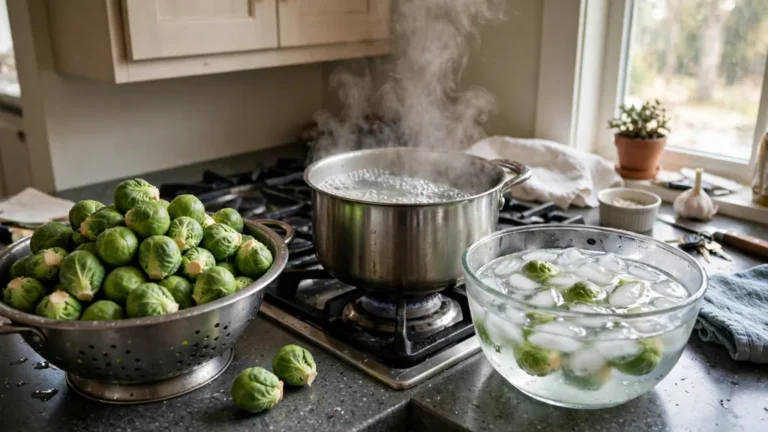
- Bring a large pot of water to a rolling boil.
- Drop the spinach in for about 1 minute, until it turns bright green.
- Lift it straight into a big bowl of ice water.
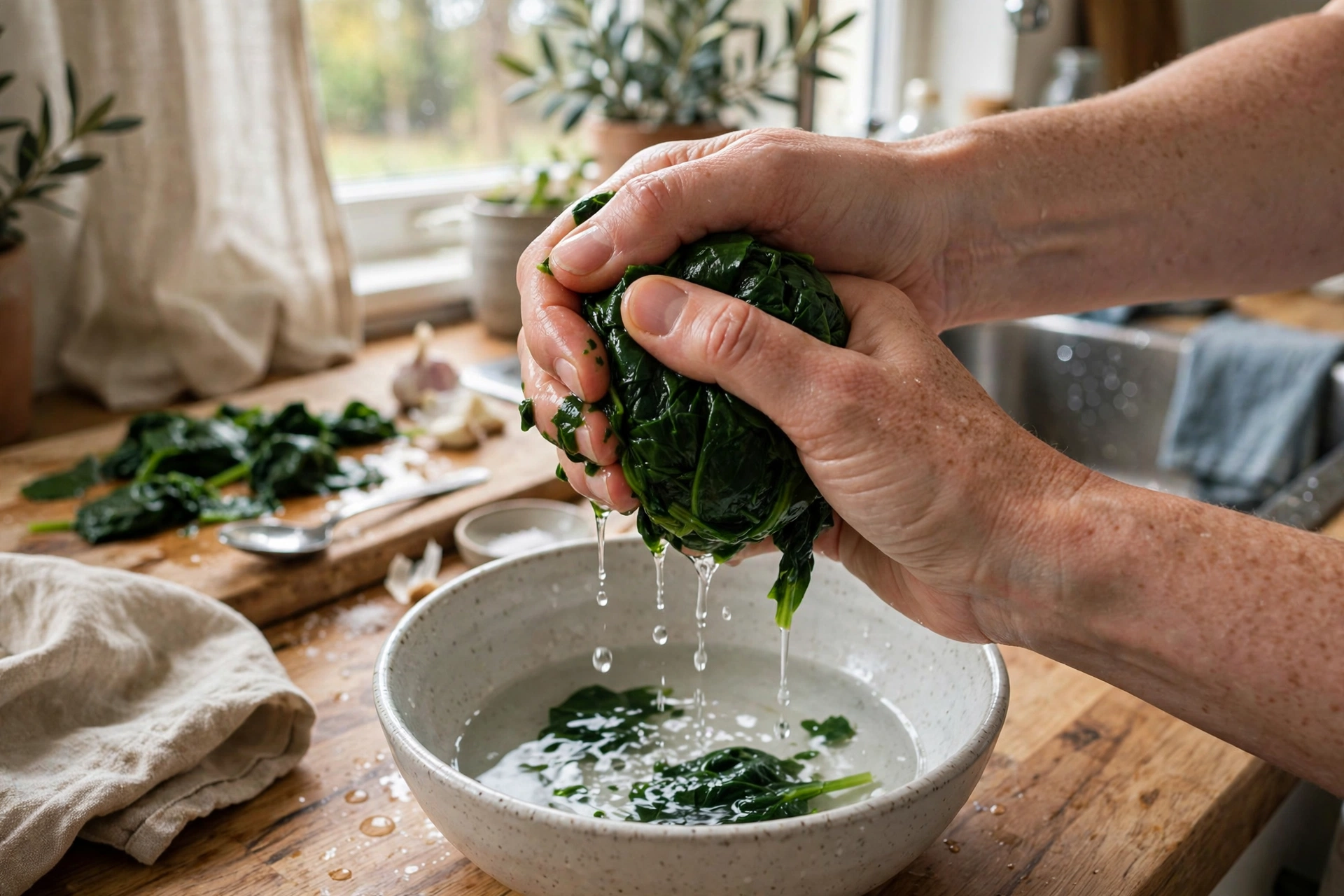
- Take handfuls and squeeze hard to push out the water.
- Pack the spinach into freezer bags in meal sized portions.
- Press out the air, label each bag with the date, and freeze flat.
The squeeze is the step people skip, and it is the one that matters most after blanching. Spinach holds a surprising amount of water, and that water turns to ice that weighs the leaves down and makes them mushy later. A tight squeeze gives you a compact ball that thaws into something much closer to fresh cooked spinach.
Flat bags stack neatly and thaw faster than a frozen block, and small portions let you take one bag for eggs and leave the rest sleeping. The same blanch, chill, and squeeze rhythm works for freezing carrots, which also keep their color far better after a short dip in boiling water.
Cooked Spinach Freezes Too
Leftover cooked spinach, the kind wilted in a pan with a little oil, freezes well in small containers. Let it cool, press it gently to remove extra liquid, and pack it with as little air as you can. Use it within about 3 months, since it has already lived one life in the pan.
Cooked spinach is handy for quick meals, since a frozen portion drops into pasta, rice, or soup with no prep at all. It is usually already seasoned, so taste the dish before you add more salt.
How Long Spinach Keeps Its Quality
Blanched spinach is the long keeper of the group. Raw spinach fades faster, and cooked spinach sits in the middle for flavor, even though freezing keeps it safe well past these windows.
- Blanched spinach: About 10 to 12 months for the best color and flavor.
- Blanched baby spinach: About 10 months, since the leaves are delicate.
- Raw frozen spinach: About 6 months, best in smoothies and cooked dishes.
- Cooked spinach: About 3 months in small portions.
- Spinach frozen in soups and sauces: About 3 months.
These are quality times, not safety deadlines. Spinach that was old before freezing will taste old after thawing, so start with leaves you would happily eat today.
Bags stored toward the back of the freezer hold their color longest.
Thawing and Cooking From Frozen
For most cooked dishes, thawing is optional. Frozen spinach can go straight into a hot soup, a simmering sauce, or a smoothie while it is still firm, and it softens within minutes. The blender does not mind frozen leaves at all, especially when a banana or some yogurt joins them.
When the recipe needs the spinach dry, like a quiche or a stuffed filling, thaw it first. Leave the bag in the fridge for a few hours, then squeeze the thawed spinach again over the sink. This second squeeze feels fussy, but it keeps egg dishes from turning watery.
Spinach and eggs are natural partners, and a squeezed handful folds into scrambled eggs or a frittata without any fuss. If breakfast portions are your goal, our notes on freezing eggs pair well, since both freeze in small amounts that cook fast on busy mornings.
Use thawed spinach within 1 to 2 days and keep it cold in the fridge. If it smells sour or feels slimy, let it go.
Mistakes That Cost Color and Flavor
- Skipping the blanch: Enzymes keep working and the spinach fades within months.
- Leaving the water in: A loose squeeze means icy, mushy leaves later.
- Freezing one giant block: A huge mass thaws slowly and unevenly.
- Using tired leaves: Old spinach tastes old no matter how well you freeze it.
- Skipping the label: Unmarked bags get forgotten at the back of the freezer.
- Thawing on the counter: Leaves sit warm and wet, which invites off flavors.
Best Ways to Use Frozen Spinach
Smoothies are the easiest win, because the leaves blend smooth and the flavor hides behind fruit. Soups welcome spinach in the last minutes of cooking, and a handful brightens lentil, bean, and chicken soups alike.
Eggs take spinach happily in scrambles, omelets, and baked dishes. Pasta sauces, curries, and stuffed shells all give thawed spinach a warm home where softness is expected. Nobody asks frozen spinach to be crisp, so let it do the jobs where tender is the point, and save fresh leaves for salads.
Frequently Asked Questions
Do you have to blanch spinach before freezing it?
No, but blanching is what makes frozen spinach keep its color and flavor for 10 to 12 months. Raw frozen spinach is fine for smoothies and cooked dishes, but it fades faster and tastes weaker, so plan to use it within about 6 months.
Can you freeze baby spinach the same way?
Yes, baby spinach blanches just like regular spinach, only faster. Give the tender leaves about 30 seconds in the boiling water, then the same ice bath and firm squeeze, and they keep for about 10 months.
Can you freeze raw spinach for smoothies?
Yes, raw spinach freezes well enough for smoothies, especially when you wash it, dry it well, and freeze it flat in bags. The color and flavor will not last as long as blanched spinach, so blend it into drinks within about 6 months.
Why is my thawed spinach so watery?
Spinach is mostly water, and freezing breaks the leaf cells so that water pours out as it thaws. A hard squeeze after blanching, and another squeeze after thawing, keep dishes like quiche and stuffed fillings from turning soggy.
Can you refreeze spinach after thawing?
You can if it thawed in the fridge and stayed cold, but the leaves will be softer and the flavor flatter. It is better to cook the thawed spinach into a dish and freeze that finished dish in portions instead.
Conclusion
Spinach freezes beautifully when you give it one minute of blanching, a cold shock, and a serious squeeze. Packed flat in portions, it waits 10 to 12 months for soups, eggs, and smoothies. Start with fresh leaves, label the bags, and the green you save today will still taste like green months from now.