Can You Freeze Sauerkraut?
Quick Answer
Yes, you can freeze sauerkraut for about 8 to 12 months, and its tangy flavor keeps well when you freeze it in portions with some of its own juice so it never dries out. Freezing pauses the live fermentation, so the probiotic benefit drops while the kraut sits frozen, but the sharp taste and much of the crunch survive the trip. When you thaw it slowly in the fridge, it is ready for cooked dishes like sausage skillets, soups and casseroles, where it stays lively and full of flavor.
What Freezing Does to Sauerkraut
Sauerkraut is alive in a way most freezer foods are not. The good bacteria that turned cabbage into kraut keep working slowly in the jar, deepening the flavor over time. The freezer presses pause on all of that. The bacteria stop working, and many of them do not survive the cold, which is why the probiotic benefit drops.
What survives is the part most people taste. The sour flavor comes from acids the bacteria already made, and those acids sit happily in the freezer without fading much. The crunch softens a little because ice crystals nick the cabbage strands, but good kraut still has bite after thawing, especially when it was firm to begin with.
Think of freezing as a storage tool, not an upgrade. It will not fix kraut that has gone mushy or smells off. Freeze kraut that tastes bright and crisp today, and it will taste that way when it thaws.
How to Freeze Sauerkraut
The juice is the whole trick here. Sauerkraut frozen dry turns dull and stiff, while kraut frozen in some of its own brine stays moist and tangy. Portion size matters too, because a small container thaws in hours while a big block takes a day.
- Stir the sauerkraut so the juice is spread evenly through it.
- Spoon portions into small airtight containers or strong freezer bags.
- Add enough of the juice to just cover the kraut in each portion.
- Leave a little room at the top, since the juice expands as it freezes.
- Seal well and press the extra air out of bags.
- Label each portion with the date and freeze at 0°F.
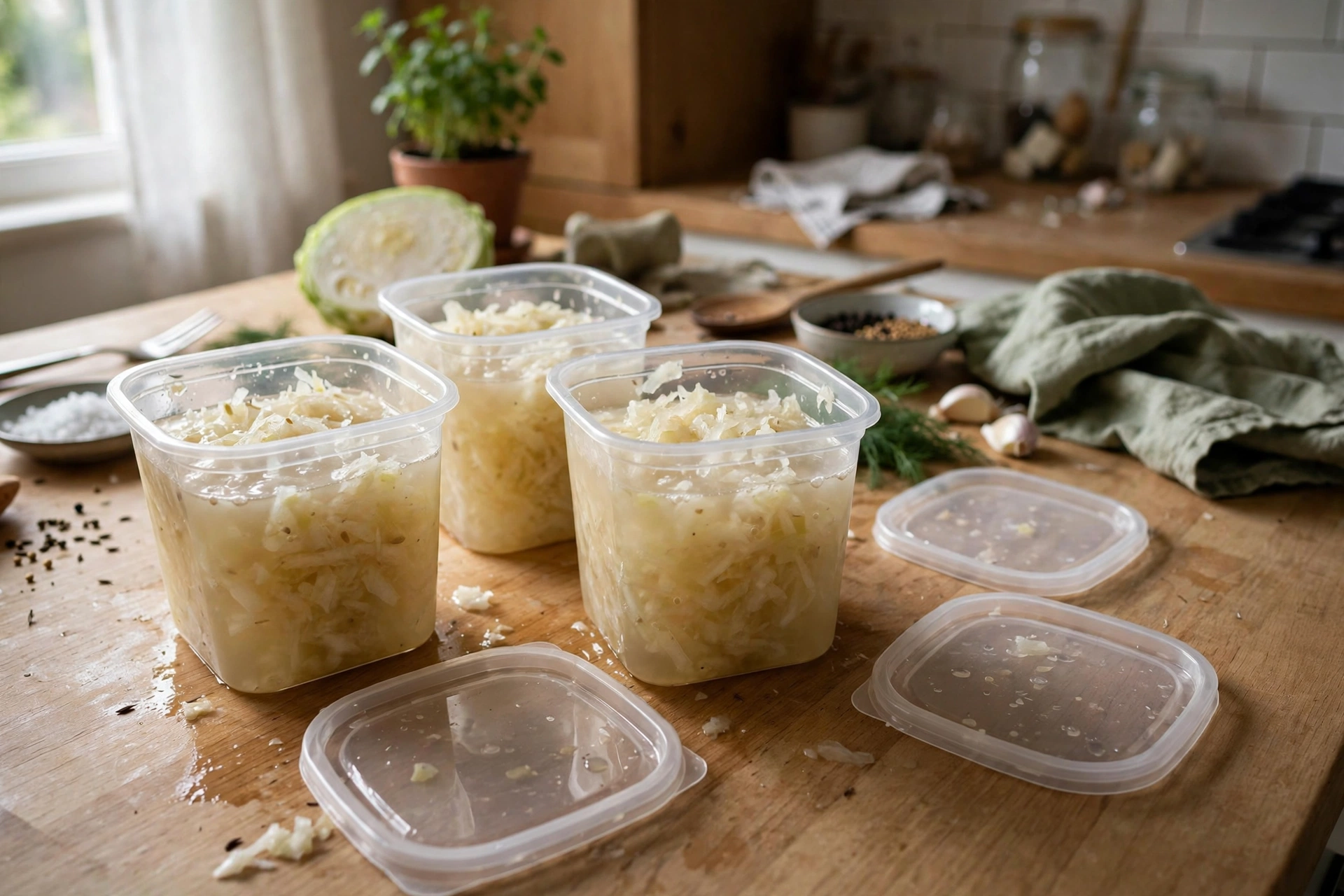
Flat bags are the space saver. Lay filled bags flat until they freeze solid, then stand them up like files. One cup portions suit sandwiches and skillets, while bigger portions match a pot of soup or a sausage bake.
If your kraut came in a glass jar, move it out before freezing. Glass can crack as the juice expands, and a broken jar in the freezer is a miserable cleanup.
Homemade, Store Bought and Canned Kraut
Homemade sauerkraut freezes exactly the way it ferments, in its own juice. Freeze it when the flavor reaches the sourness you love, because the freezer will hold it there. It will not grow more tangy while frozen, so do not freeze a young batch hoping it matures in the cold.
Store bought kraut from the refrigerated section is usually raw and alive, and it freezes the same way as homemade. Shelf stable canned sauerkraut has already been heated, so it has no live cultures left to lose, and it freezes fine with the same portion and juice method. Canned kraut often starts softer, so expect a gentler crunch after thawing.
Bagged kraut from the deli counter follows the refrigerated rules. The method never really changes: portions, juice on top, air out, label on.
How Long Sauerkraut Keeps in the Freezer
Use frozen sauerkraut within about 8 to 12 months for the best flavor. It stays safe longer while frozen solid, but the tang slowly mellows and the strands soften with time.
- Refrigerated raw kraut: About 8 to 12 months with good crunch and tang.
- Homemade kraut: About 8 to 12 months, frozen at the sourness you love.
- Canned kraut: About 8 to 12 months, with a softer bite after thawing.
- Kraut frozen without juice: Safe, but dries out and loses flavor sooner.
Steady cold protects the crunch. Store portions toward the back of the freezer rather than in the door. If plain cabbage is more your project, our guide to freezing cabbage covers the fresh heads that kraut starts from.
Thawing and Serving Frozen Sauerkraut
Thaw sauerkraut in the fridge, still sealed, so it softens slowly and keeps its juice. A small portion may thaw in a few hours, while a large container can take overnight. Once it is soft, stir it so the juice coats every strand again.
For cooked dishes, you can add still frozen kraut straight to a simmering pot. It melts into soups, stews and skillets within minutes. Give it a taste before salting, because the kraut brings plenty of tang and salt of its own.
Raw serving is fine too. Thawed kraut can top sandwiches and salads, though it will be a little softer than kraut that never froze. Drain it well for toppings so extra juice does not sog the bread. After thawing, keep it in the fridge and use it within about a week.
Mistakes That Flatten the Flavor
- Freezing without juice: Dry kraut turns stiff and bland.
- Freezing in the glass jar: Expanding juice can crack the glass.
- One giant block: It thaws slowly and unevenly.
- Skipping the label: Old portions linger and lose their tang.
- Freezing tired kraut: Mushy kraut stays mushy after thawing.
- Leaving it for years: The sour edge slowly fades away.
Another easy miss is freezing kraut right beside strong smelling foods in a thin bag. Kraut gives off aroma and picks it up too, so a sturdy container or double bag keeps flavors where they belong.
Best Dishes for Thawed Sauerkraut
Cooked dishes are where frozen kraut really shines. Simmer it with sausage and onions, stir it into potato soup, layer it in a casserole, or warm it beside pork chops. Heat softens the strands gently and spreads the tang through the whole dish.
It also lifts rich food. A forkful on a grilled sandwich cuts the fat, and kraut folded into mashed potatoes or served with dumplings adds brightness. For toppings, thaw and drain it first so the texture stays pleasant and the plate stays tidy.
Frequently Asked Questions
Does freezing sauerkraut kill the probiotics?
It reduces them a lot. Freezing pauses the fermentation and many of the live bacteria do not survive the cold, so the probiotic benefit drops. The sour flavor, which comes from acids already in the juice, survives freezing well.
Can you freeze sauerkraut in its jar?
Not if the jar is glass. The juice expands as it freezes and can crack the jar. Spoon the kraut and some juice into freezer containers or bags instead, and leave a little room at the top.
Does frozen sauerkraut stay crunchy?
Mostly, yes. Firm kraut keeps a good bite after thawing, though it softens slightly because ice crystals nick the cabbage strands. Kraut that started soft, especially canned kraut, will taste softer still.
Can you cook sauerkraut straight from frozen?
Yes. Add the frozen portion straight to simmering soup, stew or a skillet, and it will thaw into the dish within minutes. Stir it in and taste before adding salt, since the kraut is already tangy.
How long does thawed sauerkraut keep in the fridge?
About a week when kept sealed and cold. Stir it once after thawing so the juice coats the strands, and drain it well if you plan to use it as a topping.
Conclusion
Sauerkraut freezes well for about 8 to 12 months when you portion it with its juice and keep the air out. The live cultures quiet down in the cold, but the tang and most of the crunch come through. Thaw it in the fridge, then let it brighten sausages, soups and casseroles.