Can You Freeze Celery?
Quick Answer
Yes, you can freeze celery. Blanched celery keeps best quality for up to 12 months, while raw celery keeps about 2 months. Frozen celery goes limp, so save it for soups, stews and cooked dishes.
Raw or Blanched: Which Way Works Better?
Both ways work. The right choice depends on how soon you will use the celery.
- Raw celery: quick to pack, best used within 2 months, flavour fades faster
- Blanched celery: takes a few extra minutes, keeps colour and flavour for up to 12 months
Blanching means a short dip in boiling water, then a plunge into ice water. That brief heat stops the natural enzymes that dull colour and taste during storage.
If the celery will land in a soup this month, raw is fine. If you are packing away a big bunch for the year, blanch it. The extra minutes pay off.
How to Freeze Celery
Cut the celery the way you will cook with it later. Small slices suit soups and sauces. Longer sticks suit stock pots.
Follow these steps:
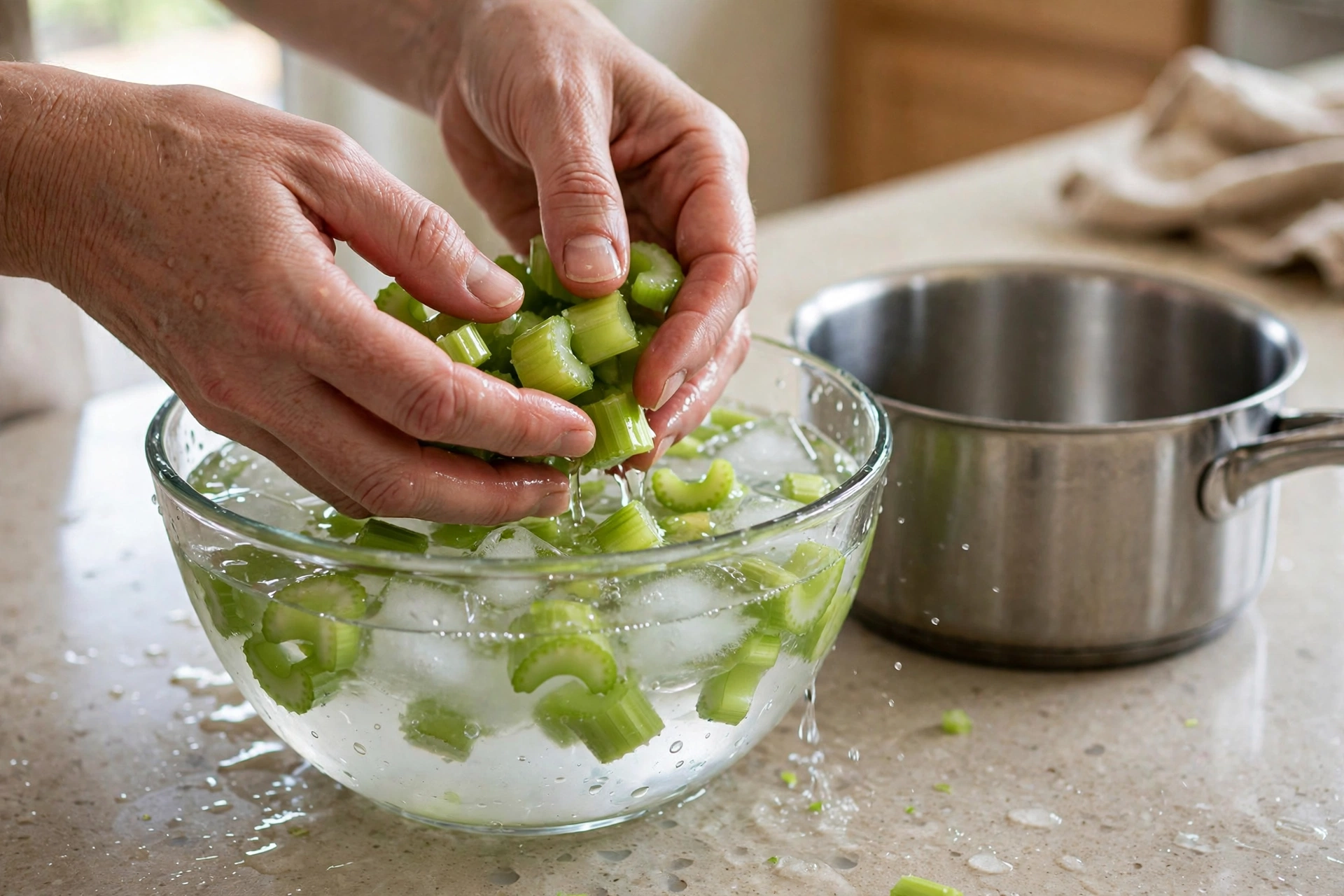
- Wash the stalks: rinse well and trim off the base and any brown ends
- Chop it up: cut the stalks into slices about the width of your thumb
- Blanch the pieces: drop them into boiling water for 2 to 3 minutes
- Cool them fast: move the pieces straight into a bowl of ice water for the same time
- Dry them well: drain and pat dry, extra water turns to ice in the bag
- Freeze on a tray: spread the pieces in one layer on a tray for 1 to 2 hours
- Bag and label: move the frozen pieces into a freezer bag, press out the air, and write the date
Skip the blanching steps if you freeze raw celery. Wash, chop, dry and bag it the same way. Just plan to use it within 2 months.
How Long Does Celery Last in the Freezer?
- Blanched celery: best quality for up to 12 months at 0°F
- Raw celery: best quality for up to 2 months at 0°F
Frozen celery stays safe while it stays frozen. Those times are about taste, colour and texture. Old celery slowly loses its flavour and can pick up freezer smells.
Once celery thaws, use it the same day. It will not keep well in the fridge after thawing.
How to Use Frozen Celery
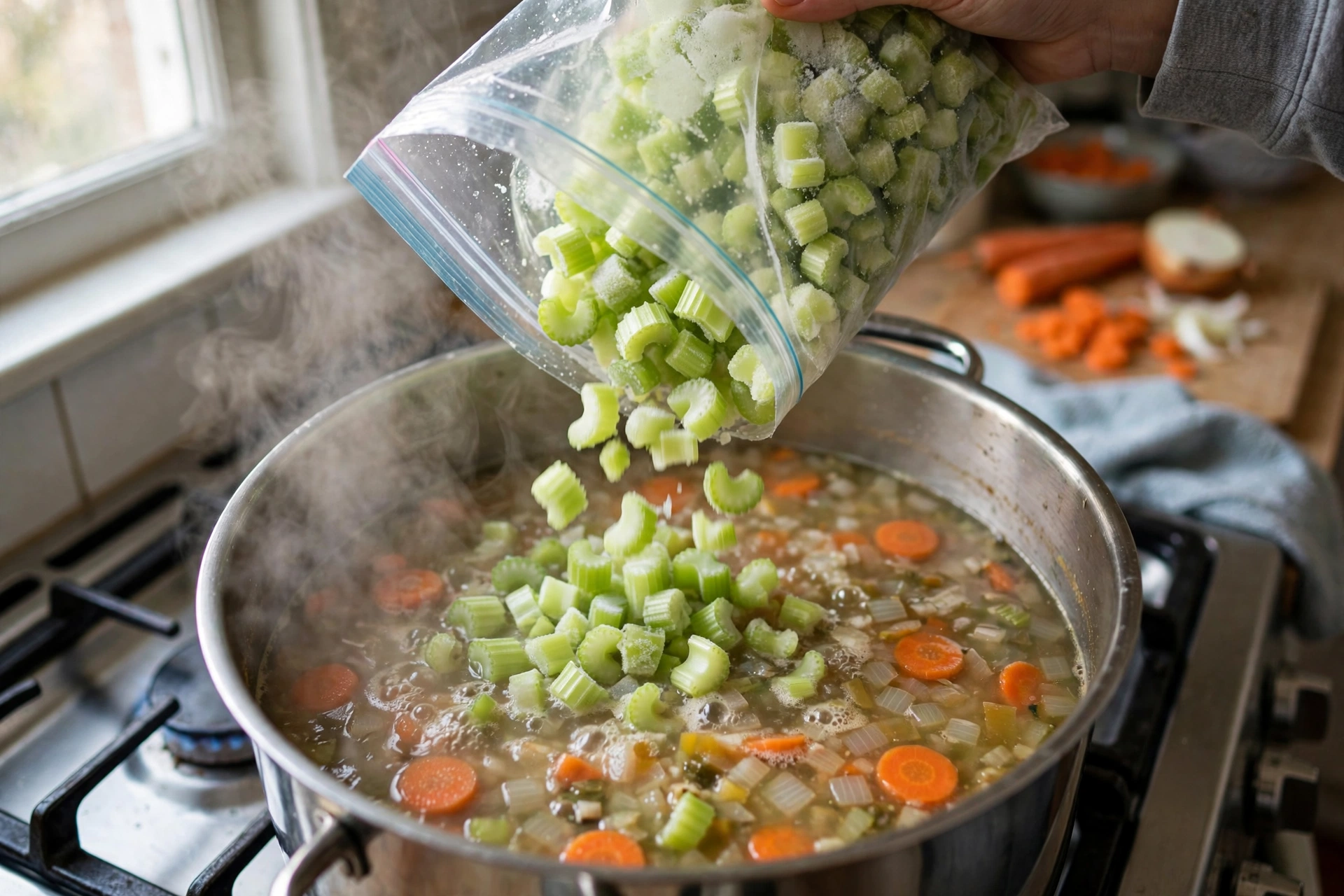
Most frozen celery can go straight into the pan. There is no need to thaw it for soups, stews, sauces or casseroles. It softens fast in hot liquid and gives the same flavour as fresh.
Celery is part of the classic soup base. Start a pot with frozen celery, frozen onions and carrot, then build your soup from there. It pairs well with earthy mushrooms in broths and gravies too.
Keep frozen celery out of raw dishes. It will never crunch again, so salads and snack trays need fresh stalks. Cooked dishes are its home, from chicken soup to a pot of cooked cabbage and beans.
Why Frozen Celery Goes Limp
Celery is mostly water, about 95 percent. That water turns to ice inside the stalks. The ice takes up more room than the liquid and breaks the thin walls that keep celery crisp.
When the ice melts, the structure is gone. The pieces turn soft and bendy. They still taste like celery, which is why cooked dishes suit them so well.
Blanching does not save the crunch. Nothing does. What blanching saves is colour and flavour over long storage.
Can You Freeze Celery Again After Thawing?
It is best not to. Thawed celery is already soft, and a second freeze turns it to mush. The flavour fades again too.
Take out only what the recipe needs. Tray freezing helps here, because the pieces stay loose in the bag. You can pour out a handful and put the rest back while still frozen.
Cooked celery inside a finished soup is a different case. That soup can cool fast and freeze as a ready meal.
Mistakes People Make When Freezing Celery
- Freezing whole stalks: big pieces freeze slowly and are hard to chop later, cut them first
- Skipping the drying step: wet celery clumps into one icy block in the bag
- Raw celery kept too long: after 2 months the flavour fades and the colour dulls
- No date on the bag: old bags hide at the back and get used long past their best
- Thawing for a salad: frozen celery will never crunch, raw dishes need fresh stalks
- Bag left open to the air: air causes freezer burn and dull white patches
Small habits fix all of these. Dry pieces, flat bags and a clear date do most of the work.
Signs Frozen Celery Has Gone Bad
Look at the colour first. Good frozen celery stays pale green. Grey or brown pieces have been stored too long or thawed and warmed up.
Smell it after thawing. Fresh celery smells clean and green. A sour or musty smell means throw it out.
Feel the pieces. A light softness is normal for frozen celery. Slimy pieces are not normal and belong in the bin.
Frequently Asked Questions
Can you freeze celery leaves?
Yes. Wash the leaves, dry them well, chop them and freeze them in a small bag. Leaves hold strong flavour. They suit stocks, soups and herb mixes, and they keep for about 6 months.
Can you freeze celery juice?
Yes. Pour the juice into ice cube trays and freeze until solid. Move the cubes into a freezer bag. Each cube adds a mild celery note to soups, smoothies and cooking liquids.
Can you freeze celery sticks for snacking later?
You can freeze them, but they will not crunch after thawing. The sticks come out soft. Save frozen celery for cooking, and keep a fresh bunch in the fridge for snacks and dips.
Do you need to peel celery before freezing?
No. The skin is thin and fine to eat. Just wash the stalks well, trim the base, and cut away any brown or stringy damaged parts before you chop.
Can you freeze celery that is already a little soft?
Yes, if it still smells fresh. Soft celery will not crisp up again, but it cooks well in soups and stocks. If it smells sour or feels slimy, throw it out instead.
Can you freeze cooked celery in soup?
Yes. Cool the soup fast, pack it in containers with a little space at the top, and freeze. Most soups keep best quality for 2 to 3 months. Reheat until steaming hot.
Conclusion
Celery freezes well when you plan to cook with it. Blanch it for long storage, chop it small, and keep it for soups and stews. Fresh stalks stay in charge of the crunch.
Sources: USDA FoodKeeper style guidance for fresh vegetables and USDA style guidance on blanching vegetables before freezing.