Can You Freeze Tomatoes?
Quick Answer
Yes, you can freeze tomatoes. Freeze them whole or chopped for up to 6 months. Use them only in cooked dishes like sauces and soups, never in fresh salads.
Whole, Chopped or Cooked: Which Freezes Best
Tomatoes freeze in three main ways. Each suits a different job in the kitchen.
- Whole tomatoes: the fastest method, wash, dry and bag them, best for sauces later
- Chopped tomatoes: freeze on a tray first, easy to add by the handful to pans
- Cooked tomato sauce: takes time now and saves time later, heat and serve
Whole tomatoes win on ease. Chopped tomatoes win on control. If freezer space is tight, cooked sauce takes the least room of all.
Size matters too. Large tomatoes suit whole freezing and sauce later. Small ones suit trays because they freeze fast and pour out loose. Match the size to the dish and prep stays short.
How to Freeze Tomatoes
Pick ripe, firm tomatoes. Soft or damaged fruit freezes badly. A little overripe is fine for sauce, but skip any with mould.
Follow these steps:
- Wash and dry: rinse the tomatoes and pat them fully dry
- Take the core out: cut out the woody top core with a small knife
- Choose whole or chopped: leave them whole for sauce, or chop them for mixed dishes
- Tray freeze chopped pieces: spread pieces on a tray for about 2 hours until hard
- Bag them well: move everything into freezer bags and press the air out
- Mark the date: write the freeze date on each bag
Whole tomatoes can skip the tray. Put them straight into a bag in one layer. They freeze solid in about 6 hours.
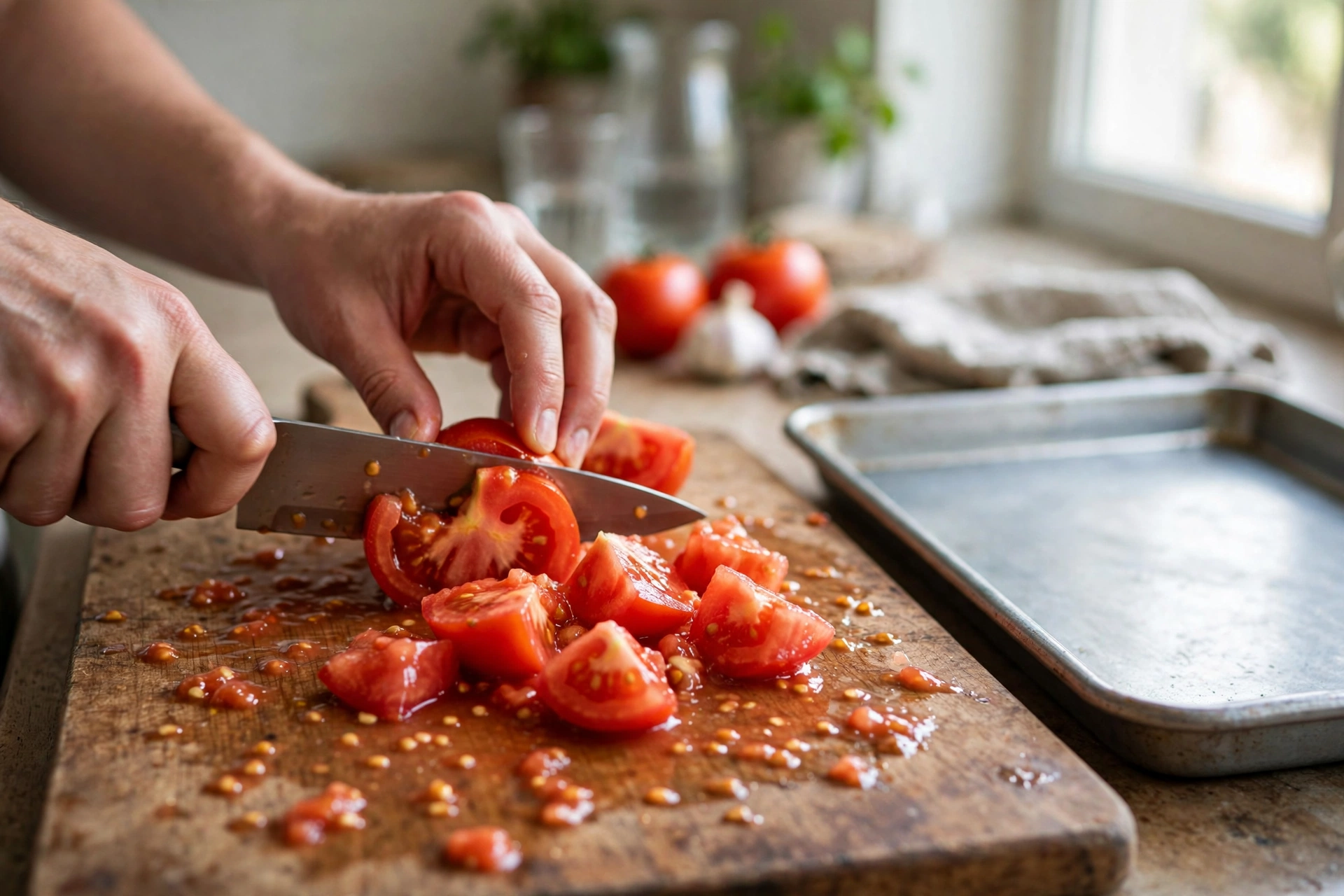
Wet tomatoes freeze into an icy block. Dry skins matter more than people think. Thirty seconds with a clean towel saves the texture.
How Long Do Tomatoes Last in the Freezer?
- Whole and chopped tomatoes: best quality for up to 6 months at 0°F
They stay safe while frozen past that point. Flavour slowly fades, though. Summer taste is the whole point, so use them within the season if you can.
Cooked tomato sauce keeps well too. Plain sauce holds good quality for about 4 to 6 months. Leave space at the top of sauce containers because liquid expands.
Peeling Frozen Tomatoes the Easy Way
Frozen whole tomatoes peel with almost no work. Hold one under warm running water for a few seconds. The skin slips off in your hand.
No boiling water is needed. No ice bath either. The freeze does the blanching job for you.
Peel them while still frozen. The flesh stays firm enough to handle. Once peeled, let them thaw in a bowl to catch the juice. That juice carries real flavour, so save it for the pot.
How Thawed Tomatoes Behave
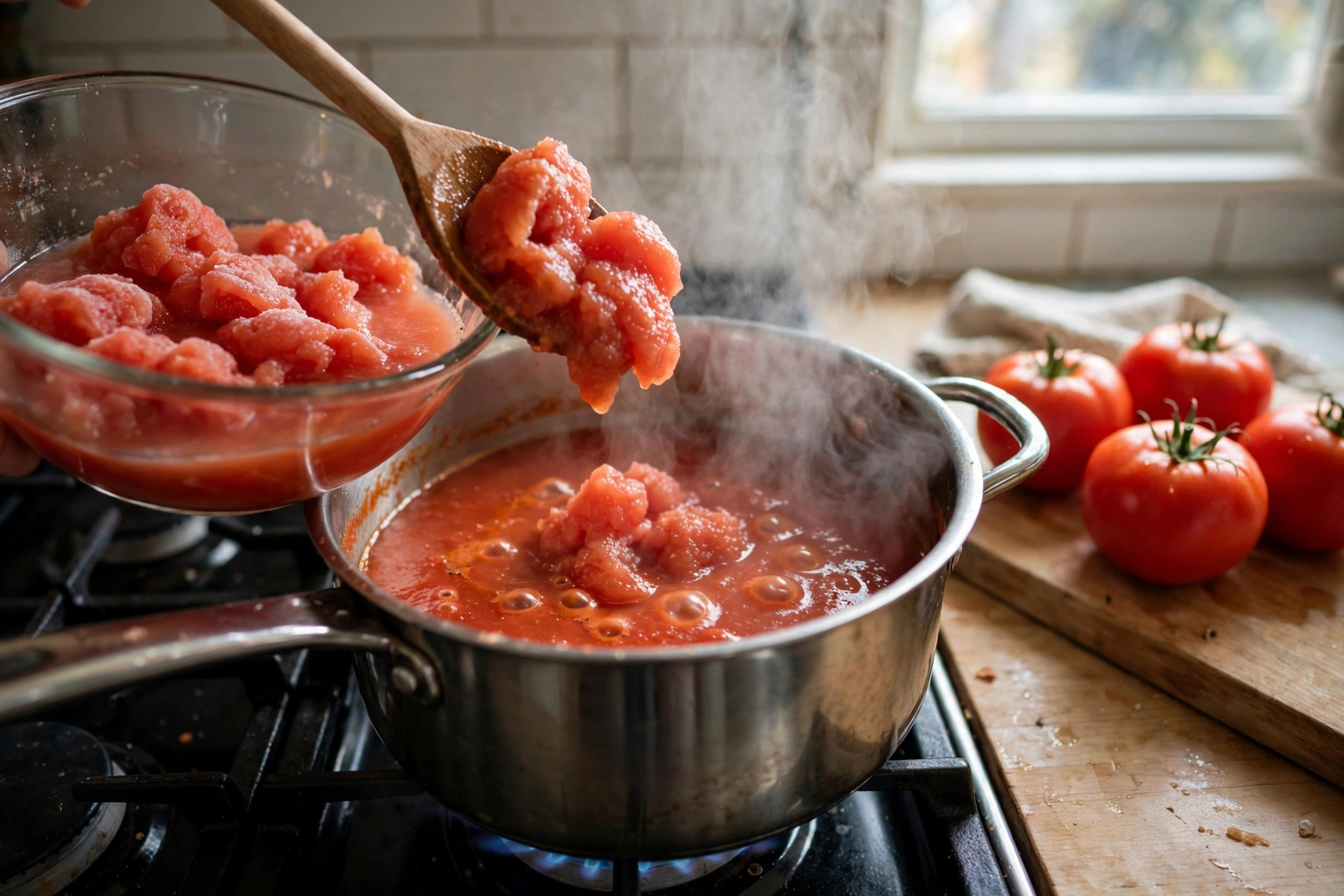
Thawed tomatoes go soft. Their cell walls break in the cold. The flesh collapses as it warms up.
That soft texture rules out fresh use. Slices will not hold on a sandwich. Pieces fall apart in a salad.
Cooked dishes are the right home. Sauces, soups, stews and baked dishes all take thawed tomatoes well. Heat brings the flavour together and texture stops mattering.
Can You Freeze Tomatoes a Second Time?
Do not refreeze raw thawed tomatoes. They turn watery and lose flavour fast.
A cooked sauce made from thawed tomatoes can freeze again. Cook the sauce fully, cool it fast, then freeze it in flat portions.
Thaw only the bag you need. Small bags suit sauces. Big bags suit a family soup day.
Mistakes People Make Freezing Tomatoes
- Freezing tomatoes for salad later: freezing ruins the firm bite, plan cooked dishes only
- Bagging them wet: surface water turns into ice and dulls the flavour
- Seasoning before freezing: herbs, garlic and onions change flavour at odd rates in the freezer, add them fresh when cooking
- Leaving the core in: the woody core stays tough even after long cooking
- No date on the bag: old tomatoes fade and hide behind newer food
Most of these are planning mistakes, not freezing mistakes. Decide the dish first. Then freeze the tomato in the form that dish needs.
A sauce plan likes whole tomatoes. A soup plan likes chopped pieces. The freezer just follows your plan.
Tell If Frozen Tomatoes Have Gone Bad
Look at the colour. Good frozen tomatoes stay deep red. Dull grey or brown patches point to very old storage.
Smell after thawing counts most. Fresh tomato smells sweet and clean. A sour or fermented smell means throw them out.
Feel is less useful here. All thawed tomatoes feel soft. Soft alone is fine. Slimy skin or mould is not.
Frequently Asked Questions
Can you freeze cherry tomatoes?
Yes. Wash and dry them, then freeze them whole on a tray. Move them into a bag once hard. Small tomatoes thaw fast and suit pan sauces and baked dishes.
Can you freeze green tomatoes?
You can. Green tomatoes freeze best sliced and chopped for cooked dishes. Their firm flesh softens after thawing. Use them in cooked sauces and chutneys rather than fried slices.
Do you need to blanch tomatoes before freezing?
No. Freezing replaces blanching here. The skin slips off under warm water after freezing. That is one reason whole tomatoes are such an easy freezer food.
Can you freeze tomato sauce and paste?
Yes. Sauce freezes in containers or flat bags for about 4 to 6 months. Paste freezes well in ice cube trays. One cube flavours a whole pan.
Why are my thawed tomatoes so watery?
Tomatoes hold a lot of water. Freezing breaks their cells, so juice runs out on thawing. Thaw in a bowl and keep the juice for the dish. Or drain it off for a thicker sauce.
Can you freeze tomatoes with mushrooms for sauce?
Yes, but freeze them apart. Mushrooms cook best from frozen in a hot pan. Tomatoes need thawing and peeling first. Separate bags keep both easy to use.
Matching Tomatoes With Your Other Freezer Foods
Sauce season uses more than tomatoes. Garlic and herbs go in fresh at cooking time. They keep their flavour better that way.
The freezer storage times chart lists tomatoes beside the vegetables they cook with. Check dates before a big sauce day. The oldest bag should cook first.
Conclusion
Tomatoes freeze with almost no prep. Wash them, bag them and use them within 6 months. Keep them for cooked dishes and their summer flavour carries the meal. Freeze them at peak ripeness and winter sauces taste like the garden again.
Sources: USDA FoodKeeper style storage guidance and USDA freezing guidance for vegetables and tomatoes.