Can You Freeze Lettuce?
Quick Answer
Yes, you can freeze lettuce, but it will not stay crisp for salads, because the leaves hold so much water that they turn soft and limp as soon as they thaw. When you wash the leaves well, dry them thoroughly and pack them flat in a freezer bag, they keep best for about one month. Once thawed, they work well in soups, cooked dishes and green smoothies, where the softer texture is hardly noticed and the greens still save a bag from going to waste.
Why Salad Lettuce Disappoints After Thawing
Lettuce is mostly water held inside thin leaf cells. When those cells freeze, ice pushes against the cell walls and breaks them. After thawing, the water leaks out and the leaf turns soft, dark and floppy. That change is about quality, not a simple yes or no safety answer.
This is why a frozen bag of romaine will not come back as a crunchy salad base. It will not give you the snap you want in sandwiches, wraps or taco toppings either. If crisp texture matters, fresh lettuce is the right choice and frozen lettuce should be used where softness is already normal.
When Freezing Lettuce Makes Sense
Freezing can still help when you have more lettuce than you can eat and hate wasting it. The best plan is to freeze with a cooked use in mind from the start. Think of it like freezing an herb or a soft green for blending, not like saving salad for next week.
Sturdy leaves usually handle the process a little better than delicate spring mix. Romaine hearts, iceberg, butter lettuce and thick leaf lettuce are easier to portion than fragile mixed greens. Even then, the end use should be cooked or blended, because the thawed texture will stay soft.
How to Freeze Lettuce for Cooked Use
- Pick over the leaves: Remove any slimy, brown or damaged pieces before washing, because freezing will not improve tired lettuce.
- Wash gently: Rinse the leaves in cool water and lift them out so grit stays behind in the bowl.
- Dry well: Spin or pat the leaves dry, since extra surface water makes bigger ice crystals and a wetter thaw.
- Chop for the final dish: Cut leaves into ribbons for soup or smaller pieces for smoothies, so you can add them straight from the bag.
- Pack flat: Fill a freezer bag, press out extra air and lay it flat so it stacks neatly and thaws fast.
- Label clearly: Write the date and the planned use on the bag, such as soup, smoothie or cooked greens.
How Long Frozen Lettuce Keeps
For best quality, use frozen lettuce within about one month. It can stay safe longer while kept frozen, but the flavor gets dull and the leaves lose more liquid the longer they sit. Small flat bags help because you can use the whole amount at once and avoid opening the same bag again and again.
Keep the freezer at 0°F or below and store the bag away from the door if possible. Warm spots near the door cause tiny thaw and refreeze cycles that hurt greens fast. A flat bag tucked into a basket with other smoothie ingredients is easy to grab and easy to rotate.
How to Thaw and Use It
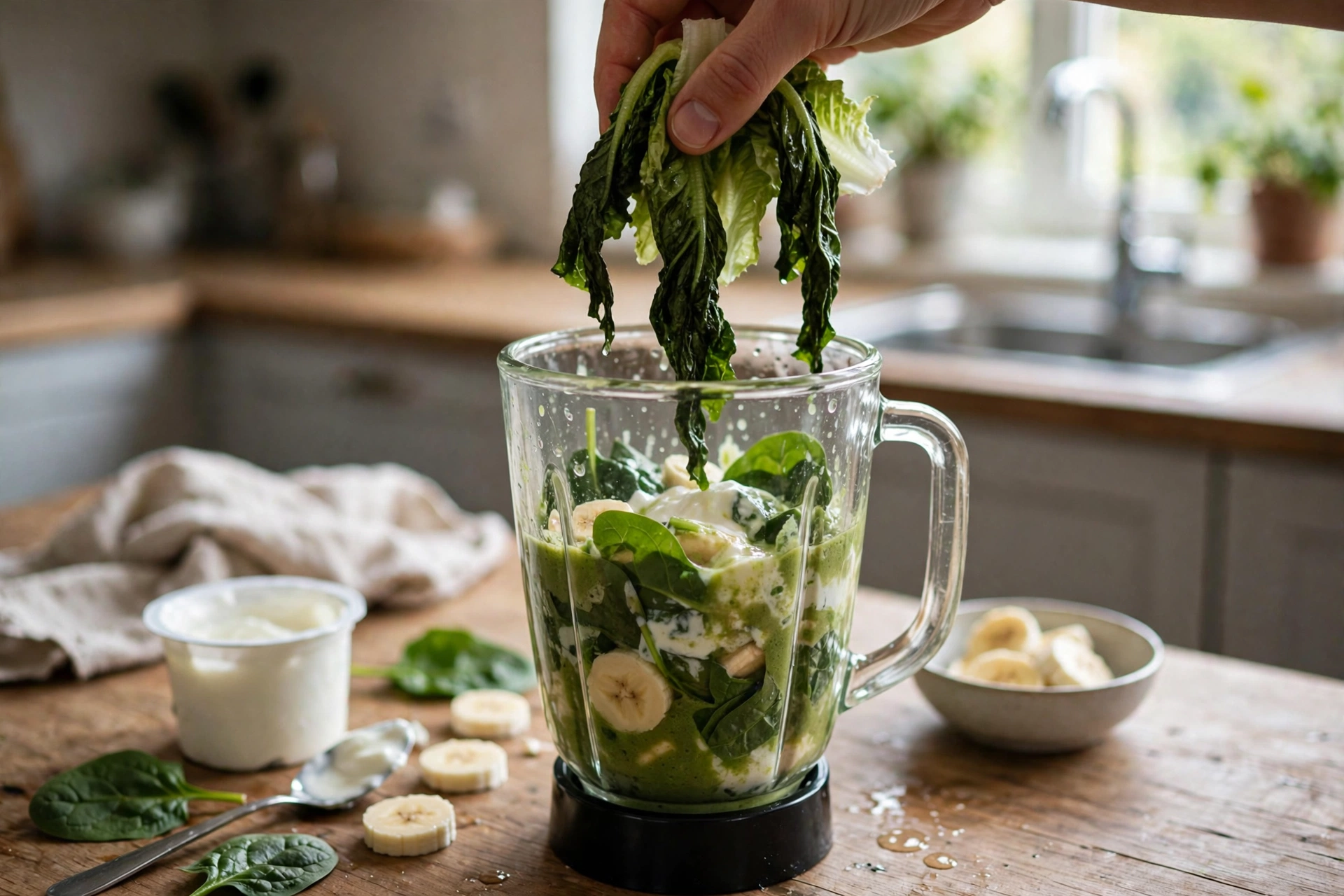
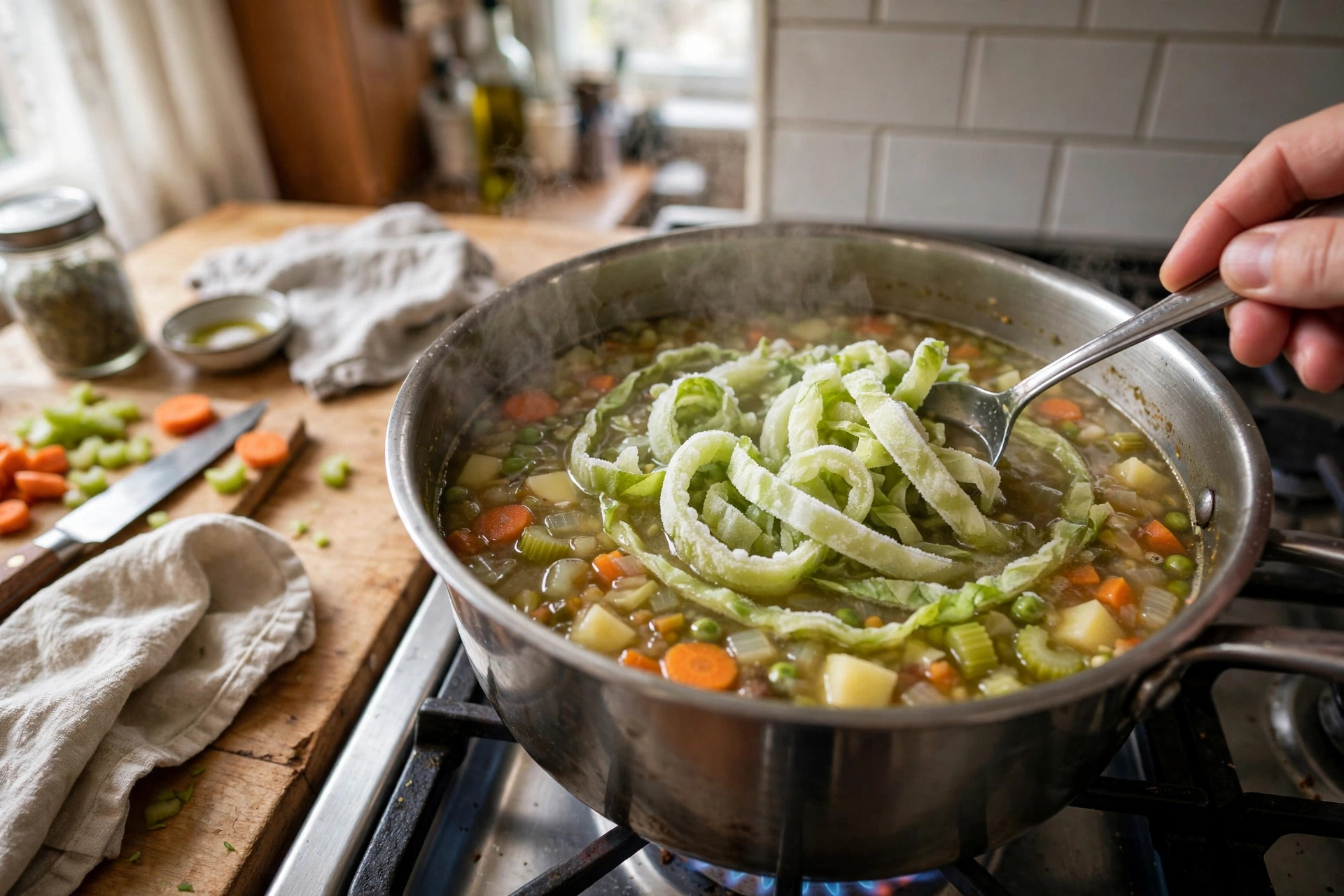
For smoothies, you can add the frozen leaves straight to the blender, and they blend best with juicy fruit, yogurt or milk to help the blades move smoothly. A few pieces from freezing bananas make the blend creamy and hide the softer green flavor, while for soup you can stir the frozen ribbons in near the end of cooking so they soften without turning muddy.
For cooked dishes, thaw the bag briefly in the fridge or under cool water, then squeeze out extra liquid before adding it to the pan. That squeeze step matters. It keeps a sauce from turning watery and helps the greens mix into eggs, rice bowls or pasta without flooding the dish.
Best Uses for Thawed Lettuce
Best uses: Green smoothies, vegetable soup, blended sauces, cooked egg dishes and warm grain bowls where soft leaves disappear into the meal.
Good backup use: A quick wilted side with garlic and olive oil, served right away while hot.
Avoid these uses: Garden salads, sandwich crunch, burger toppings, lettuce cups and any plate where crisp leaves are the point.
If you grow lettuce and have a big harvest, freeze only the extra amount you would truly cook. A sturdy vegetable like cabbage gives a different result because its leaves are thicker, and our guide to can you freeze cabbage covers that sturdier option.
Mistakes That Make Frozen Lettuce Worse
Freezing a whole head without washing or sorting is the biggest mistake. Dirt and damaged leaves stay trapped in the bag, and the center may freeze slowly. A little prep gives you a bag you will actually use instead of a frozen mystery block.
Skipping the drying step is another common problem. Wet leaves clump into a solid sheet and release more water later. Also avoid packing lettuce with strong smelling foods in a thin bag, because greens pick up freezer odors quickly.
Frequently Asked Questions
Can I freeze lettuce for salad later?
No, not with good results. Thawed lettuce turns limp and watery, so it will not give you a crisp salad. Use frozen lettuce only in cooked dishes or smoothies.
Which lettuce freezes least badly?
Thicker leaves such as romaine hearts usually hold up a little better than delicate mixed greens. They still soften after thawing, so the planned use matters more than the variety.
Can I freeze a whole head of lettuce?
It is not a good method. A whole head freezes unevenly and is hard to wash, dry and portion. Leaves or chopped ribbons packed flat work much better.
Does frozen lettuce taste different?
Yes, the flavor becomes milder and a bit dull. Pair it with garlic, lemon, herbs, fruit or a rich sauce so the softer taste blends into the dish.
Can I put frozen lettuce straight into soup?
Yes. Add it near the end of cooking so it warms through and softens. This is one of the easiest ways to use a small bag without waste.
Conclusion
Freeze lettuce only with the right job in mind. It will not save salad night, but it can save extra greens from the bin when soup, smoothies or cooked dishes are on the plan. Keep the bag small, dry and clearly labeled, and use it within about one month for the best result.